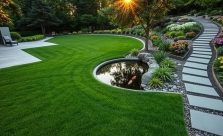
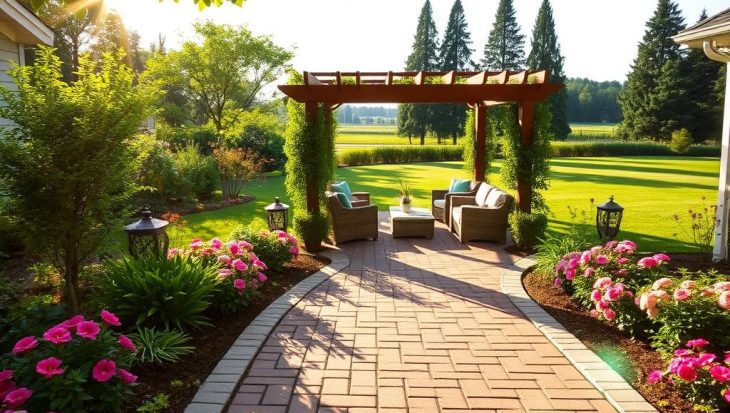
Homeowners across the United States are finding a new way to make their outdoor areas better. They are using pavers to beautify their homes. These materials are great for turning simple spaces into beautiful, useful areas that increase your home’s value and look.
Make your outdoor space better with pavers by changing your garden, patio, or walkway. Pavers can make everything from rustic paths to fancy pool areas. They offer many design options to change your outdoor look.
Looking to make a nice entrance, a cozy patio, or a beautiful walkway? Pavers are the perfect choice. They help homeowners make their outdoor spaces stylish and long-lasting.
Key Takeaways
- Pavers provide versatile design options for outdoor spaces
- Enhance property value through strategic landscaping
- Multiple material choices available for different aesthetics
- Durable solution for creating functional outdoor areas
- Improves overall home appearance and curb appeal
What are Pavers and Their Benefits?
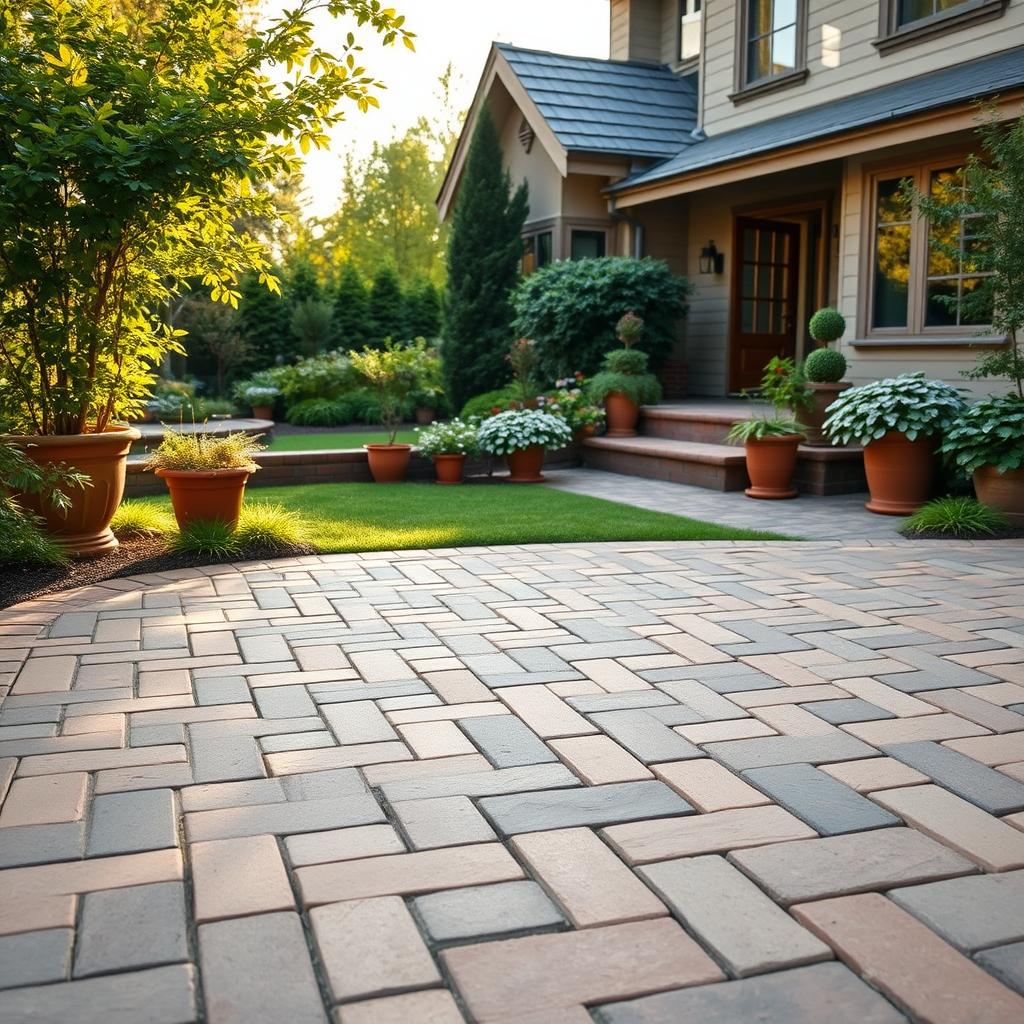
Pavers are special materials that make outdoor areas look great and work well. They turn driveways, patios, walkways, and landscaping into stunning spots. Using pavers for home improvement lets homeowners easily improve their outdoor spaces.
Pavers come in many types, shapes, and designs. This means you can pick the perfect paver to make your home look better and work better too.
Understanding Different Types of Pavers
Homeowners have many paver options to fit their design needs:
- Concrete pavers: Affordable and durable
- Natural stone pavers: Elegant and timeless
- Brick pavers: Classic and traditional
- Permeable pavers: Environmentally friendly
The Advantages of Using Pavers
Here are some key benefits of pavers:
- They last a long time
- You can replace single stones easily
- They offer many design choices
- They’re slip-resistant
- They need little upkeep
“Pavers transform ordinary outdoor spaces into extraordinary landscapes” – Landscape Design Expert
Environmental Considerations
Pavers are good for the planet too. Permeable pavers let water drain, helping the environment. Some pavers can be recycled or made from eco-friendly sources.
Choosing the right pavers lets homeowners create beautiful, useful outdoor areas. It also helps the environment.
Popular Paver Materials for Outdoor Spaces
Choosing the right paver material can make your landscaping stand out. Pavers offer many options to create beautiful outdoor spaces. They let you show off your style and taste in design.
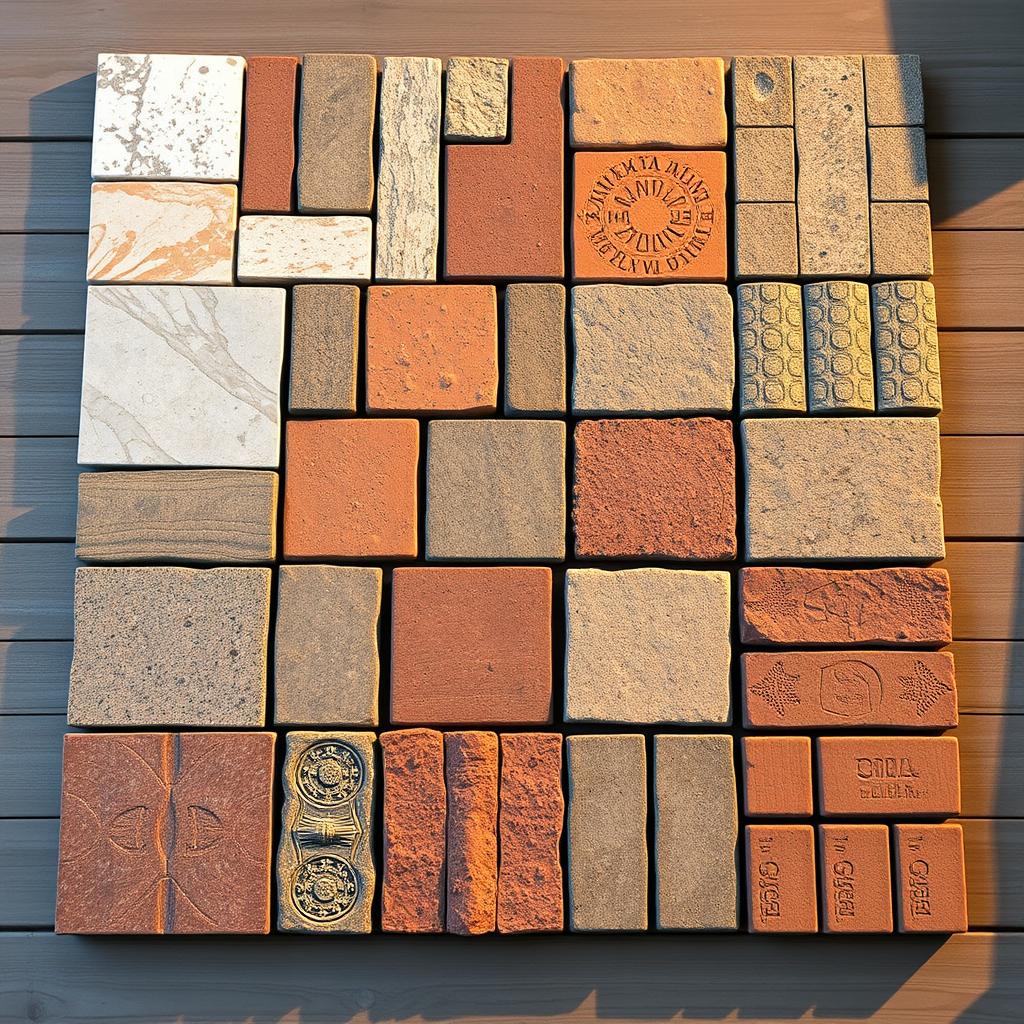
It’s important to know what each paver material offers. Let’s look at the top choices for making your outdoor areas better.
Concrete Pavers
Concrete pavers are great for landscaping because they’re versatile. They come in:
- Shapes and sizes
- Color options
- Texture variations
Brick Pavers
Brick pavers add a classic touch to any outdoor space. Custom paver designs with brick can make your patios, walkways, and driveways look unique.
Natural Stone Pavers
Natural stone pavers are both beautiful and durable. You can pick from:
- Granite
- Slate
- Limestone
- Travertine
“The right paver material can transform your outdoor space into a stunning landscape design.” – Landscape Design Experts
| Paver Material | Durability | Cost Range | Best Used For |
|---|---|---|---|
| Concrete | High | $5-$10 per sq ft | Patios, Walkways |
| Brick | Medium-High | $10-$20 per sq ft | Driveways, Borders |
| Natural Stone | Very High | $15-$30 per sq ft | Luxury Landscapes |
When picking pavers, think about your budget, what you like, and what your project needs.
Designing with Pavers: Ideas and Inspiration
Transforming your outdoor spaces with creative paver design ideas can dramatically enhance your home’s aesthetic appeal and functionality. Pavers offer incredible versatility, allowing homeowners to craft unique landscapes that reflect personal style and architectural preferences.
Exploring paver projects requires imagination and strategic planning. Each outdoor area presents an opportunity to implement innovative design concepts that elevate your exterior environment.
Stunning Patio Transformations
Patios represent the perfect canvas for creative paver projects. Consider these design strategies:
- Geometric pattern layouts
- Mixed material combinations
- Contrasting color schemes
- Multi-level patio designs
Welcoming Walkway Designs
Walkways can become architectural statements with thoughtful paver selections. Curved pathways and intricately designed borders can guide visitors through your landscape while adding visual interest.
Elegant Driveway Concepts
Driveways are no longer just functional spaces. Modern paver design ideas transform these areas into elegant entrance features that boost curb appeal and property value.
Pool Surrounds and Deck Innovations
Pool areas benefit tremendously from strategic paver installations. Slip-resistant surfaces, complementary color palettes, and seamless transitions can create luxurious outdoor retreats.
Paver design is an art form that combines functionality with aesthetic beauty.
How to Choose the Right Pavers for Your Home
Choosing the right pavers is key to beautifying your home. Your outdoor space can be transformed by considering a few important factors. These will help create a stunning landscape design.
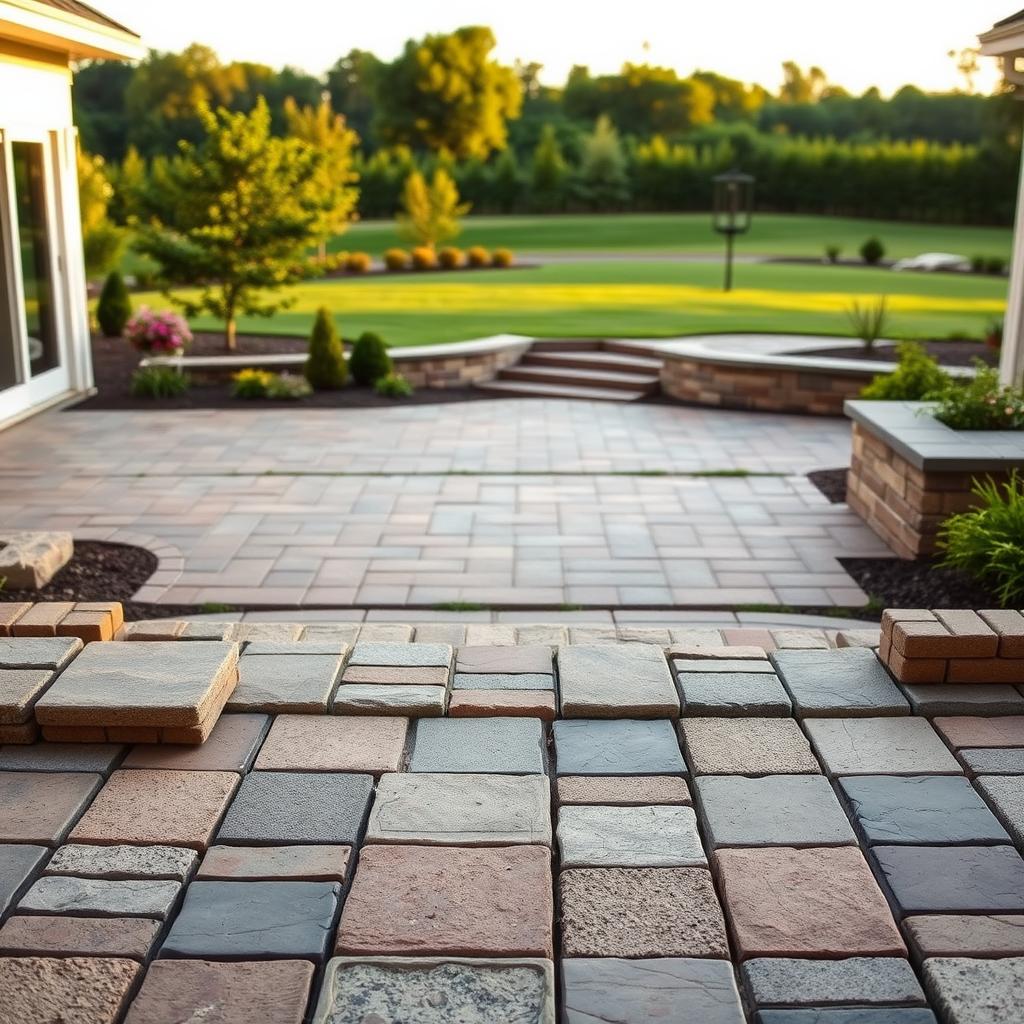
Essential Factors to Consider
Homeowners should look at several key aspects when picking pavers:
- Climate and weather resistance
- Intended usage of the outdoor space
- Budget constraints
- Existing architectural style
- Maintenance requirements
Color and Style Selections
Paver color and style are vital for visual harmony. Your choice can dramatically impact the overall aesthetic of your outdoor environment.
| Paver Color | Best Suited For | Design Impact |
|---|---|---|
| Neutral Tones | Modern Homes | Sleek, Minimalist Look |
| Warm Terracotta | Mediterranean Styles | Rich, Inviting Atmosphere |
| Slate Gray | Contemporary Designs | Sophisticated Appearance |
Matching Pavers with Your Landscape
Creating a cohesive landscape design requires careful paver selection. Think about matching existing elements like garden beds and architectural features. This will help achieve a harmonious outdoor space.
- Analyze your current landscape’s color palette
- Consider texture and material of surrounding elements
- Think about the overall visual balance
By carefully evaluating these aspects, you can pick pavers that beautify your home. They will also create a seamless, inviting outdoor environment that reflects your personal style.
Installation Process of Pavers: A Guide for Homeowners
Turning your outdoor area into a beautiful space with pavers needs careful planning. Home improvement with pavers can make your property look better and work better. Knowing the best paver installation tips is key to getting great results.
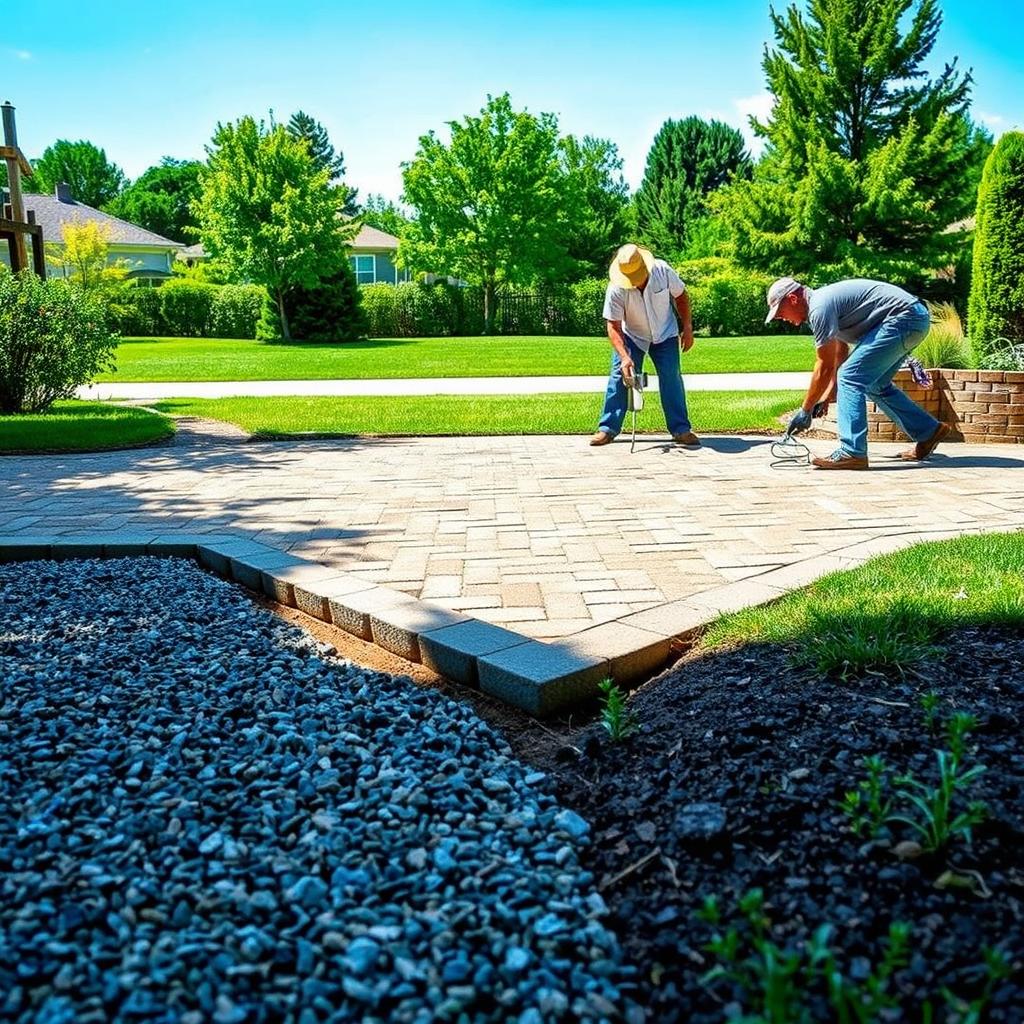
Professional paver installation has many important steps that homeowners should know before starting. Even if you’re doing it yourself, understanding the process helps you make better choices.
Preparing the Site
Getting the site ready is the first step to a successful paver installation. Important steps include:
- Excavating the area to the proper depth
- Removing existing vegetation and debris
- Creating a stable, level base
- Installing proper drainage systems
Laying the Pavers
The actual paver installation needs precision and detail. Best paver installation tips for this stage include:
- Using high-quality landscape fabric
- Spreading a compact base of crushed stone
- Carefully placing pavers in the desired pattern
- Maintaining consistent spacing between pavers
Finishing Touches
Finishing your home improvement with pavers involves final touches for durability and beauty:
- Filling joints with fine sand
- Compacting the entire surface
- Sealing the pavers for long-term protection
Professional tip: Always check local building codes and consider consulting with a landscaping expert to ensure optimal results.
Maintenance Tips for Paver Surfaces
To keep your paver surfaces looking great, you need to care for them regularly. A good paver maintenance guide helps protect your investment. It keeps your outdoor spaces beautiful.
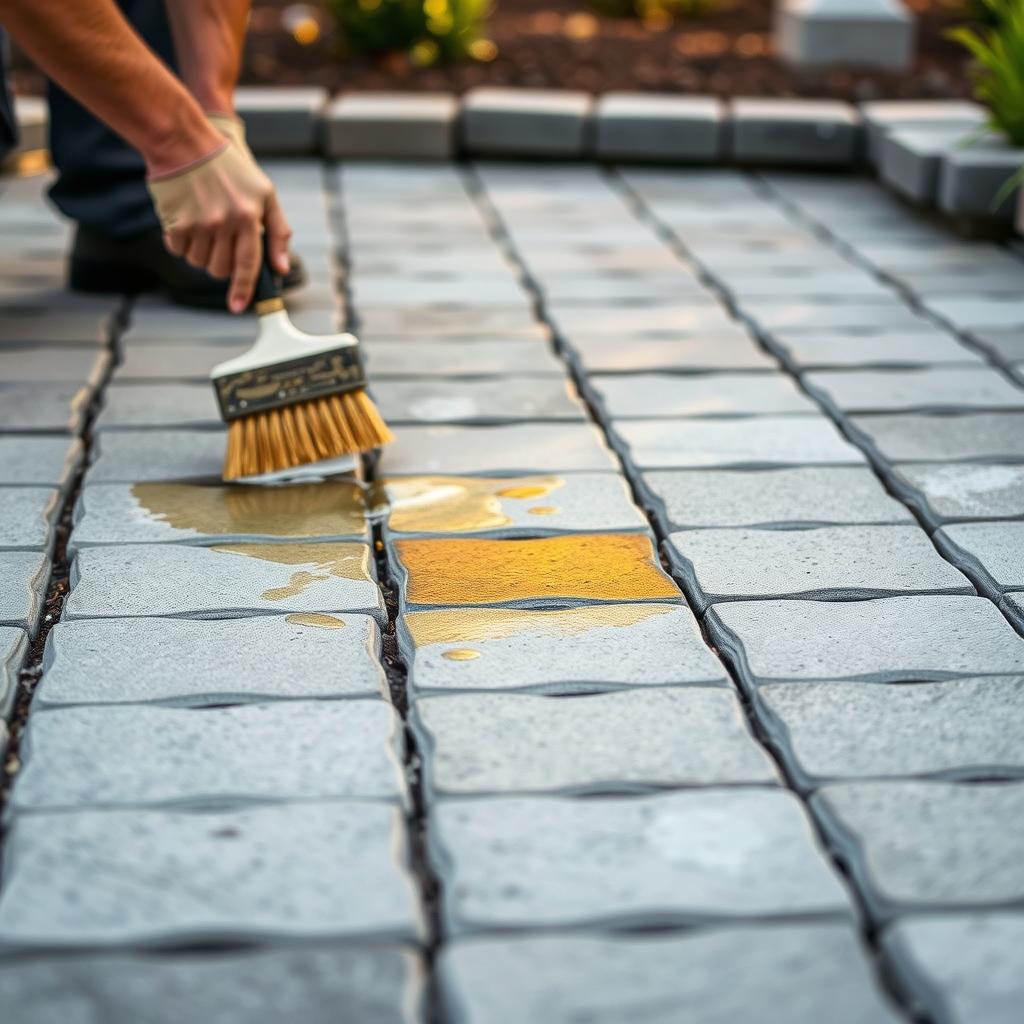
Regular care keeps your pavers looking good and working well for a long time. Here are the key steps to keep your pavers in top shape.
Regular Cleaning and Upkeep
Effective paver maintenance starts with regular cleaning. Here are the important steps to keep your surfaces looking great:
- Sweep pavers weekly to remove debris and prevent stain buildup
- Use a pressure washer annually to deep clean the surface
- Remove weeds between pavers using a specialized removal tool
Repairing Damaged Pavers
Fixing damage quickly stops it from getting worse. Individual paver replacement is a cost-effective way to fix small damage areas.
| Damage Type | Recommended Action | Difficulty Level |
|---|---|---|
| Cracked Paver | Remove and replace individual paver | Easy |
| Sunken Area | Relevel base and reset pavers | Moderate |
| Significant Staining | Deep cleaning or professional treatment | Challenging |
Seasonal Maintenance Practices
Protect your pavers all year with these seasonal tips:
- Spring: Inspect for winter damage and clean thoroughly
- Summer: Apply sealant to protect against UV rays
- Fall: Clear leaves and prepare for winter weather
- Winter: Use plastic snow shovels to prevent surface scratching
By following these maintenance tips, you can keep your paver surfaces beautiful and functional. This ensures a stunning outdoor space for years to come.
Enhancing Curb Appeal with Pavers
Using pavers to beautify your home is a great way to make your outdoor area look amazing. Pavers let homeowners get creative with their landscape design. They help make a great first impression.
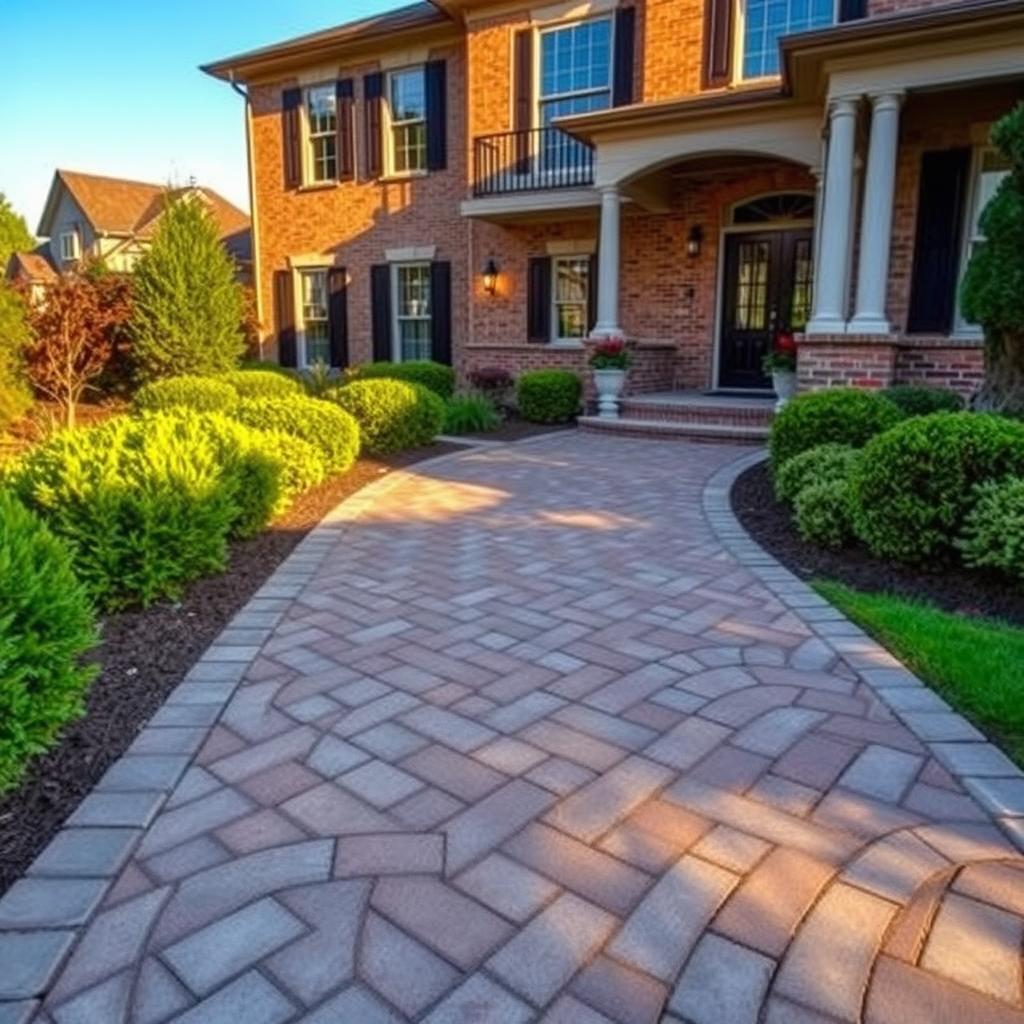
Placing pavers wisely can make your property look better and work better. Homeowners can use pavers in many ways to improve their outdoor space.
Creating Attractive Pathways
Pathways guide visitors through your landscape. The right paver design can make your home look welcoming. It should match your home’s style.
- Choose contrasting paver colors to define walkway edges
- Select patterns that match your home’s exterior design
- Consider curved pathways for a softer, more organic look
Using Pavers for Garden Borders
Paver borders give your garden clean lines and structure. They look great and keep your garden in place. They also stop soil from washing away.
| Paver Border Type | Best Use | Visual Impact |
|---|---|---|
| Raised Stone Borders | Flower Beds | Dramatic Elevation |
| Flat Brick Borders | Vegetable Gardens | Clean Separation |
| Mixed Material Borders | Mixed Landscape Zones | Textural Interest |
Incorporating Lighting with Paved Areas
Lighting makes paved areas magical at night. The right lights can highlight your home’s features. They create a magical outdoor experience.
“Thoughtful lighting turns ordinary paver installations into extraordinary landscape designs.” – Landscape Design Professional
- Install recessed LED lights within pathway pavers
- Use solar-powered landscape lighting for eco-friendly illumination
- Create depth with alternating light intensities
Beautifying your home with pavers needs creativity and planning. By using these strategies, homeowners can make their outdoor space inviting. They can create impressive exterior environments.
DIY Projects with Pavers for Homeowners
Turning your outdoor area into something special doesn’t need a pro. With some effort, homeowners can make their spaces look amazing. These ideas will guide you in creating beautiful outdoor features that make your home stand out.
Homeowners can start with small paver projects to improve their outdoor areas. It’s all about starting small and gaining confidence with each project.
Simple Paver Patio Installation
Building a paver patio is a great first step for DIY fans. Here’s what you need to do:
- Measure and mark your desired patio area
- Excavate the ground to a depth of 6-8 inches
- Add a gravel base and compact thoroughly
- Install landscape fabric to prevent weed growth
- Lay sand and carefully place pavers in your chosen pattern
Building a Paver Fire Pit
A paver fire pit is perfect for cozy gatherings. Make sure to use heat-resistant pavers and follow local building codes.
- Choose a level area in your yard
- Create a circular foundation with gravel
- Stack pavers in a circular design
- Leave small gaps for air circulation
- Add a metal fire ring for safety
Crafting a Paver Garden Path
Paver design ideas can turn a simple garden into a stunning landscape. A well-designed garden path adds beauty and structure to your outdoor area.
- Plan your path’s route and width
- Remove grass and level the ground
- Use different paver sizes for visual variety
- Add edging to maintain path definition
- Fill gaps with decorative gravel or moss
Always wear protective gear and use the right tools. Take your time and focus on the details. This way, you’ll get professional-looking results.
Hiring Professionals vs. DIY for Paver Installation
Choosing between hiring pros or doing it yourself for paver installation is tough. It’s about your skills, time, and money. Home improvement with pavers needs careful thought.
Pros and Cons of Professional Help
Professional paver installers can really change your outdoor space. They know a lot about complex projects. Here are the good and bad sides:
- Expertise: Pros know how to handle tricky drainage and leveling
- Time-saving: They work fast and get it done quickly
- Quality guarantee: They usually offer warranties on their work
Cost Considerations
Money matters a lot when you decide. Professional installation costs more but can save you from big mistakes.
| Installation Type | Estimated Cost | Time Investment |
|---|---|---|
| Professional Installation | $10-$20 per square foot | 1-3 days |
| DIY Installation | $3-$8 per square foot | 1-2 weeks |
When to Choose a Contractor
Go for a contractor for:
- Big or tricky paver projects
- Complicated designs
- Tough terrain or drainage problems
- If you don’t have time or skills
“The right installation method can make or break your outdoor living space.” – Landscape Design Experts
Your choice depends on your skills, the project’s size, and what you can afford. Think about the pros and cons to decide what’s best for your paver project.
Final Thoughts on Beautifying Your Home with Pavers
Pavers are a great way for homeowners to make their outdoor spaces stylish and functional. They do more than just add to your yard – they create areas that show off your taste and make your home look better.
Using pavers means more than just a surface. They are durable, flexible in design, and add value to your home’s look. They can turn your patio into a cozy spot or your walkway into a welcoming path. Pavers make your outdoor areas beautiful and useful, perfect for relaxing or having fun.
Making a Lasting Impression
Experts in landscaping say that the right pavers can really make a house stand out. By picking the right colors and patterns, you can make your outdoor space unique. This makes your home memorable and impressive to everyone who sees it.
The Long-Term Value of Pavers
Investing in pavers is a smart choice for your home. They need little care, can handle the weather, and might even make your home worth more. No matter if you choose concrete, stone, or brick pavers, your outdoor area will stay lovely and useful for a long time.
Encouraging Outdoor Living Spaces
Pavers help turn your outside areas into part of your home. They make great spots for parties, chilling out, or family time. With good design and the right placement, your outdoor space can become a peaceful retreat that shows off your style.