
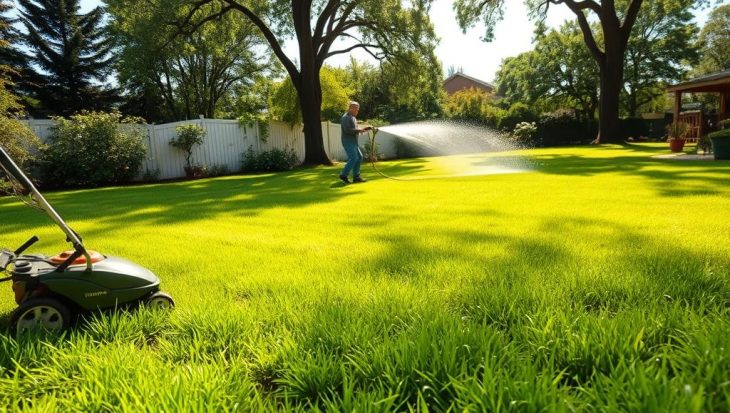
Summer lawn care can turn your outdoor space from dull to dazzling. Homeowners across the United States know that successful landscaping tips need careful planning and regular upkeep. To get your lawn ready for summer, it’s more than just watering—it’s about a detailed approach to lawn care.
Experts in lawn care see each yard as a unique challenge. With the right strategies, you can make your lawn lush and vibrant, even in hot weather and dry conditions. Good lawn care keeps your grass healthy, green, and strong during the hottest months.
This guide will show you key landscaping tips for a great summer lawn. We’ll cover soil prep, watering, and more. You’ll learn how to create a lawn that’s the envy of the neighborhood.
Key Takeaways
- Understand your specific grass type and local climate zone
- Develop a consistent lawn maintenance schedule
- Implement proper watering and mowing techniques
- Prepare soil through aeration and nutrient management
- Use targeted pest control and weed prevention strategies
Essential Spring Prep Work for a Summer-Ready Lawn
Getting your lawn ready for summer starts with spring maintenance. It’s all about paying attention to details and taking proactive steps. This ensures your lawn stays lush and healthy all summer long.
Effective summer lawn care starts with spring prep. Homeowners need to tackle several key tasks. These tasks are the foundation for a vibrant lawn.
Clearing Winter Debris and Dead Grass
Winter leaves behind a lot of debris that hinders grass growth. Removing dead leaves, branches, and matted grass lets new shoots grow. It also helps them breathe.
- Rake thoroughly to remove winter-killed grass
- Clear away fallen branches and organic debris
- Inspect for areas of snow mold or winter damage
Initial Soil Assessment and Testing
Knowing your soil’s condition is key for lawn care. A soil test gives you insights into nutrients and pH balance.
| Soil Test Component | Ideal Range | Action Required |
|---|---|---|
| pH Level | 6.0 – 7.0 | Add lime or sulfur if needed |
| Nitrogen Levels | Medium | Apply balanced fertilizer |
| Organic Matter | 5-10% | Add compost if low |
Basic Tool Preparation
Having the right tools is essential for efficient lawn care. It makes a big difference in summer.
- Sharpen lawn mower blades
- Check sprinkler system functionality
- Inspect and repair garden tools
- Calibrate spreader for even fertilizer application
“Proper preparation prevents poor performance in lawn care.” – Landscaping Professional
By focusing on these spring lawn care steps, homeowners can build a strong foundation. This ensures a beautiful, resilient lawn that thrives in summer.
Understanding Your Grass Type and Climate Zone
Choosing the right grass for your lawn is key to good lawn care. Different grasses do well in certain climate zones. It’s important to know your local weather before planting.
Lawn care experts say to find out your area’s climate to pick the best grass. The U.S. is split into several zones for growing grass:
- Cool-season regions (Northern states)
- Warm-season regions (Southern states)
- Transition zones (Middle states with mixed conditions)
Drought-resistant grasses are popular for easy lawn care. They can handle long dry spells and look good in hot summers.
“Knowing your grass type is the foundation of effective lawn management” – Landscape Design Professionals
Here are some top drought-resistant grasses:
- Bermuda grass – Great for hot, dry southern areas
- Buffalo grass – Native to North American prairies
- Zoysia grass – Handles heat and drought well
- Choosing the right grass keeps your lawn healthy and looking good all summer. Talking to local landscaping pros can help find the best grass for your area.
Soil Aeration Techniques for Healthier Grass Growth
Keeping your lawn lush and vibrant is more than just watering and mowing. Soil aeration is key. It helps fix soil compaction issues.
Compacted soil blocks nutrients, water, and air from reaching grass roots. This hinders growth and weakens the lawn. Aeration makes holes in the ground, letting these essentials in.
Benefits of Core Aeration
- Improves oxygen circulation in soil
- Reduces water runoff and increases moisture retention
- Breaks up dense soil layers
- Stimulates deeper root growth
- Enhances nutrient absorption
Best Timing for Aeration
Timing is key in lawn care. For cool-season grasses, aerate in early fall or spring. Warm-season grasses do best in late spring and early summer.
Professional vs DIY Aeration Methods
Homeowners can choose between renting equipment or hiring pros. DIY saves money but pros offer detailed treatment.
- DIY Method: Rental core aerators from local garden centers
- Professional Service: Detailed lawn assessment and specialized equipment
Choosing depends on lawn size, grass type, and comfort with equipment.
Smart Watering Strategies for Summer Heat
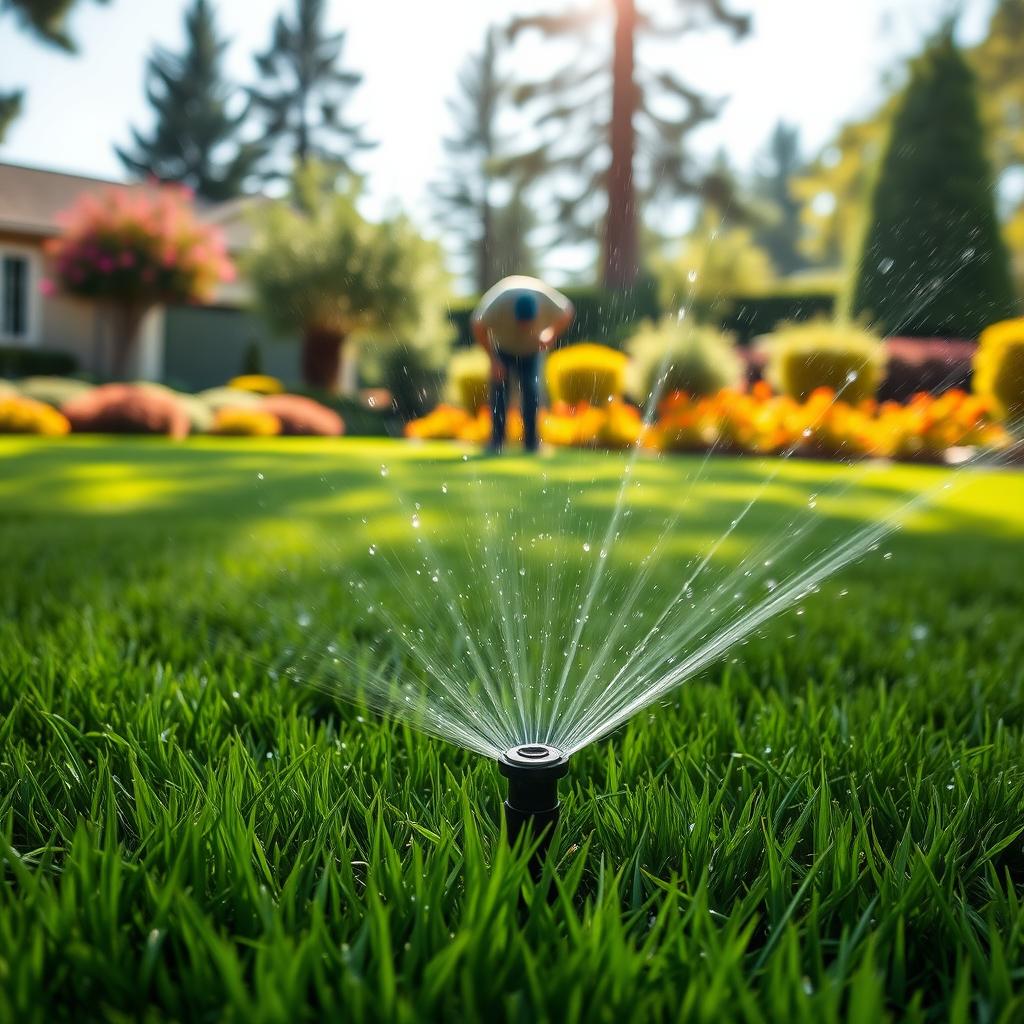
Summer heat can quickly turn a lush lawn into a dry, brittle one. Effective lawn irrigation is key during these months to keep your yard healthy and green.
Understanding your lawn’s watering needs is the first step in summer lawn care. Different grass types need different amounts of water. This makes a smart approach very important.
- Water deeply but infrequently to encourage robust root growth
- Aim for 1-1.5 inches of water per week, including rainfall
- Water early morning (between 4-10 AM) to minimize evaporation
Modern lawn irrigation techniques can save water while keeping grass healthy. Here are some smart watering strategies:
- Install smart irrigation controllers that adjust based on weather conditions
- Use drip irrigation systems for precise water distribution
- Mulch around plants to retain moisture and reduce water requirements
Pro tip: Check local water restrictions before implementing your summer lawn maintenance plan.
A well-hydrated lawn is your best defense against summer heat and drought stress.
By using these lawn irrigation techniques, you’ll have a resilient, green landscape. It will thrive even in the hottest months.
Proper Mowing Heights and Techniques
Mastering lawn care is all about the right mowing techniques. These techniques are key to keeping your lawn healthy and green during summer. The right mowing can turn your yard into a stunning outdoor space.
Your mowing strategy affects your grass’s health and look. Professional landscapers focus on precision in lawn care.
Optimal Cutting Heights by Grass Type
Each grass type needs a specific mowing approach. Here’s a quick guide to cutting heights:
- Bermuda grass: 1-1.5 inches
- Kentucky Bluegrass: 2-3 inches
- St. Augustine grass: 2.5-3 inches
- Zoysia grass: 1-2.5 inches
Mowing Pattern Recommendations
Choosing the right mowing pattern is important. Alternate your mowing direction with each session. This helps your grass grow upright and healthy. Here are some patterns to try:
- Straight lines
- Diagonal cuts
- Circular patterns
Equipment Maintenance Tips
Keeping your equipment in top shape is vital. Make sure your mower blades are sharp, clean, and adjusted right. Dull blades can harm your lawn and make it more prone to disease.
Consistent and careful mowing is the key to a beautiful lawn this summer. Spend time learning about your grass type and what it needs.
Effective Weed Control and Prevention Methods

Keeping your lawn weed-free is key to its health. Weeds can take over, stealing nutrients and water from your grass. Knowing how to prevent weeds is essential for a lush, green lawn.
Start by making your grass thick and healthy. A dense lawn stops weeds from growing. Here are some tips for a weed-free lawn:
- Maintain proper mowing height to encourage strong grass growth
- Water deeply but infrequently to promote robust root systems
- Fertilize appropriately to support grass health
- Address bare patches immediately to prevent weed invasion
For weeds already in your lawn, there are several ways to get rid of them. Small areas can be cleared by hand, while herbicides work for bigger problems. Organic treatments like vinegar are good for the environment and effective against weeds.
It’s important to know what kind of weeds you have. Different weeds need different treatments. Local garden stores or extension offices can help you figure out how to tackle your weed problem.
Remember: Prevention is always easier than cure when it comes to weed control.
Professional lawn care services can offer custom weed management plans. They’ll tailor their approach to your lawn’s needs, helping you keep your outdoor space looking great.
Landscaping Tips on Getting your Lawn in Shape for the Summer
Summer lawn care needs careful planning and regular work. Homeowners can make their yards look great by following a clear lawn care plan.
Creating a Weekly Maintenance Schedule
Having a weekly plan keeps your lawn healthy in summer. Good landscaping tips include breaking tasks into smaller parts.
- Monday: Check for lawn stress or damage
- Wednesday: Mow at the right height
- Friday: Water deeply and check irrigation
- Weekend: Treat weeds and fix small issues
Professional vs DIY Approaches
Choosing between hiring pros or doing it yourself depends on your time, money, and lawn type. Knowing what your lawn needs helps make this choice.
| DIY Approach | Professional Service |
|---|---|
| Lower cost | Expert knowledge |
| Flexible scheduling | Comprehensive treatments |
| Personal satisfaction | Guaranteed results |
Cost-Effective Solutions
Smart summer lawn care doesn’t have to be expensive. Strategic investments in basic tools and regular care can save money on big repairs.
- Use multi-purpose lawn tools
- Purchase quality seeds
- Invest in efficient watering systems
- Learn basic lawn repair techniques
By sticking to a care plan, planning ahead, and focusing on key areas, homeowners can have a beautiful summer lawn without spending too much.
Natural and Chemical Fertilization Approaches
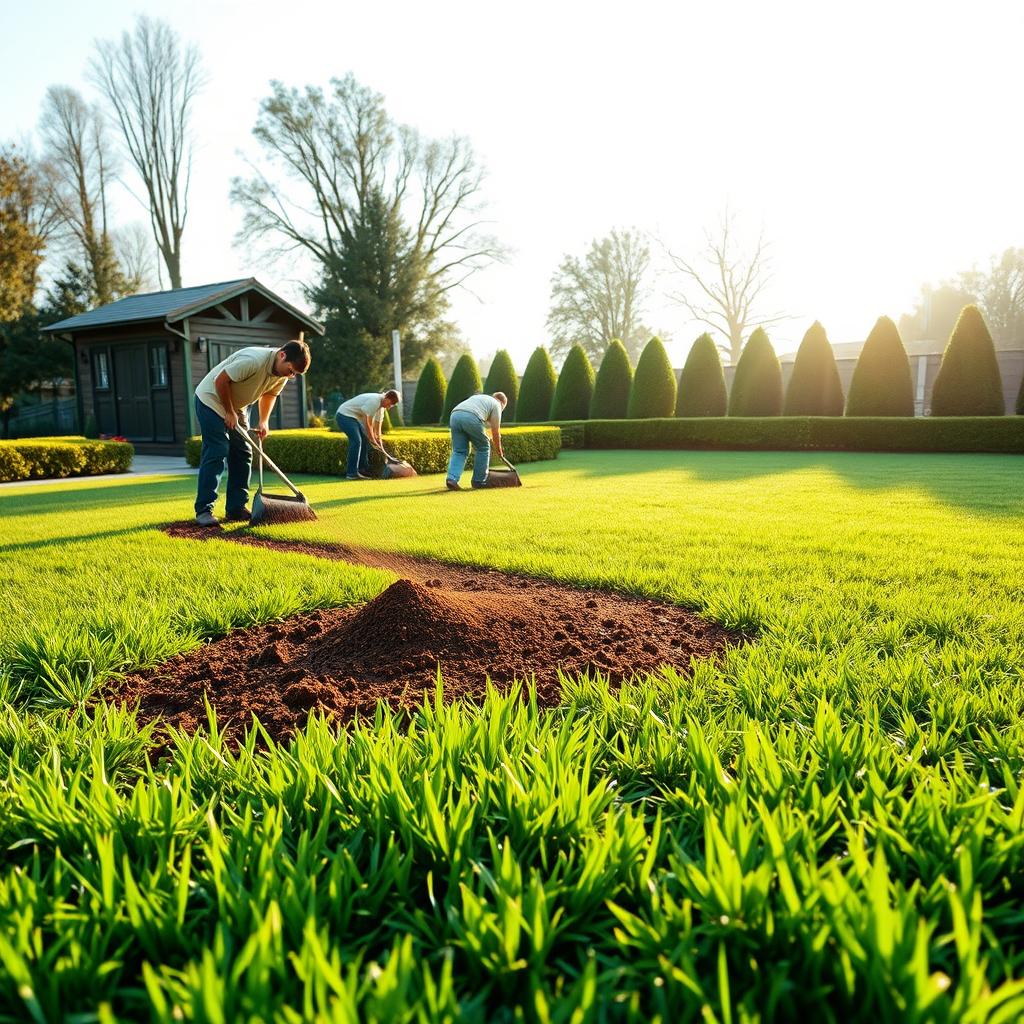
Choosing the right fertilization strategy is key to a healthy lawn. Homeowners have two main options: natural and chemical fertilizers. Each has its own benefits for lawn care.
Natural fertilizers are great for sustainable lawn care. They help keep the soil healthy for a long time. These fertilizers give nutrients slowly, feeding the grass roots well. Common natural fertilizers include:
- Compost
- Bone meal
- Grass clippings
- Manure
Chemical fertilizers give a quick nutrient boost. They have the right mix of nutrients. But, they need careful use to avoid harming the environment.
| Fertilizer Type | Nutrient Release | Cost | Environmental Impact |
|---|---|---|---|
| Natural Fertilizers | Slow | Lower | Minimal |
| Chemical Fertilizers | Rapid | Higher | Potential Runoff |
When picking a fertilization method, think about your grass type, local weather, and environment. Soil testing can help find the best fertilization plan.
Experts say to fertilize in the early spring and fall. This is when the grass grows best. It helps the grass absorb nutrients well and grow strong.
Dealing with Common Summer Lawn Pests
Summer lawn care can get tough when pests show up. Knowing how to spot and handle them is key to a healthy lawn.
Identifying Harmful Insects
Good lawn care starts with knowing the pests to watch out for. Some common summer pests include:
- Grubs: White, C-shaped larvae that eat grass roots
- Chinch bugs: Tiny black bugs that harm grass by sucking its juices
- Armyworms: Caterpillars that can quickly ruin big areas of lawn
- Billbugs: Weevils that damage grass stems
Natural Pest Control Solutions
Eco-friendly lawn care doesn’t mean you can’t fight pests. Natural methods can keep your lawn safe:
- Introduce beneficial nematodes to fight grubs
- Use neem oil as a natural bug killer
- Attract birds and beneficial bugs that eat pests
- Keep your lawn moist to prevent pests
“Prevention is always better than cure in summer lawn maintenance.” – Lawn Care Experts
Prevention Strategies
Being proactive can really help avoid pests. Here are some prevention tips:
- Mow your lawn at the right height
- Avoid too much water
- Keep the soil healthy with the right fertilizer
- Check your lawn often for pests
By using these tips, you can keep your lawn safe from summer pests and keep it looking great.
Drought-Resistant Landscaping Solutions

Turning your lawn into a tough landscape needs smart choices. Pick drought-resistant grasses and use smart landscaping tricks. The secret to a great summer lawn is choosing grass that can handle heat and little water.
Homeowners have many good options for drought-resistant grasses:
- Buffalo Grass: Native to North America, this grass does well with little water
- Bermuda Grass: It loves the heat and grows back fast
- Zoysia Grass: Its dense growth means it uses less water
- St. Augustine Grass: Great for warm, coastal areas
Xeriscaping cuts down water use while keeping your landscape looking good. It uses native plants, smart irrigation, and less water on turf.
Here are some tips for a summer-ready lawn:
- Put plants with the same water needs together
- Use mulch to keep soil moist
- Install drip irrigation systems
- Choose low-water ground covers
Using these drought-resistant methods, you can make a beautiful, lasting landscape. It will stay green and healthy even in tough summer weather.
Creating Shade Areas to Protect Your Lawn
Summer heat can be tough on your lawn. That’s why planning shade is key in lawn care. It keeps your grass healthy and looking good during the hottest times.
Here are some landscaping tips for making shade zones:
- Planting strategic tree varieties
- Installing shade structures
- Using pergolas and arbors
- Designing intelligent landscape layouts
There are many ways to keep your lawn cool in summer. For example, native trees like Red Maple and Dogwood cool the air and make your yard look great.
| Shade Solution | Lawn Benefits | Installation Difficulty |
|---|---|---|
| Native Trees | Natural cooling, wildlife support | Moderate |
| Pergolas | Instant shade, architectural interest | High |
| Shade Sails | Flexible coverage, modern look | Low |
“A well-shaded lawn is a resilient lawn” – Landscape Design Experts
When you’re getting your lawn ready for summer, remember shade is more than looks. It’s about keeping your grass healthy for years. Good shade plans can also save water and prevent heat damage.
Conclusion
Getting your lawn ready for summer takes hard work and smart planning. With the right steps, your yard can turn from dull to a lively green space. Each tip we’ve shared is key to a strong, healthy lawn.
Lawn care is more than looks; it’s about making your outdoor area thrive in summer heat. By using these tips, you can keep your lawn in top shape. This includes preparing the soil, watering wisely, and controlling pests.
The best lawns come from regular care and knowing your local environment. Spend time learning about your grass, climate, and yard issues. With effort and the right info, you can have a beautiful lawn that everyone admires.
Your lawn is a part of your home. Use these tips, stay consistent with care, and watch your yard grow beautiful all summer. A bit of work can make your outdoor space lush and welcoming.