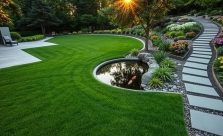
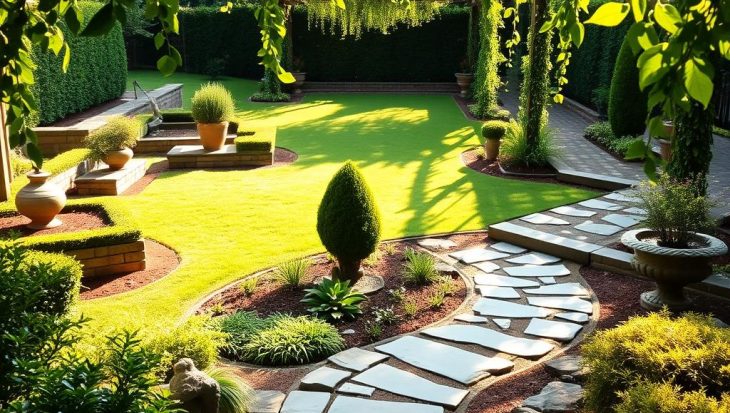
Start your garden makeover with smart hardscaping. It turns simple outdoor areas into amazing spaces. By adding structural elements, you make your garden both beautiful and useful.
Garden hardscaping is more than just planting. It uses materials like stone, concrete, and wood to add structure and beauty. This way, you can create spaces that are both inviting and reflect your style.
With creative hardscaping, you can make your garden truly special. Imagine having beautiful paths and cozy seating areas. These designs turn your yard into a unique outdoor room that mixes nature with human touch.
Key Takeaways
- Hardscaping adds structure and functionality to garden spaces
- Strategic design increases property value and aesthetic appeal
- Materials like stone and concrete create lasting outdoor environments
- Hardscaping helps define and organize garden areas
- Professional design can maximize outdoor living space
Understanding Hardscaping: A Beginner’s Guide
Changing outdoor spaces is more than just adding plants and grass. Hardscaping design lets homeowners make their landscapes both functional and beautiful. It extends living areas beyond the usual spots.
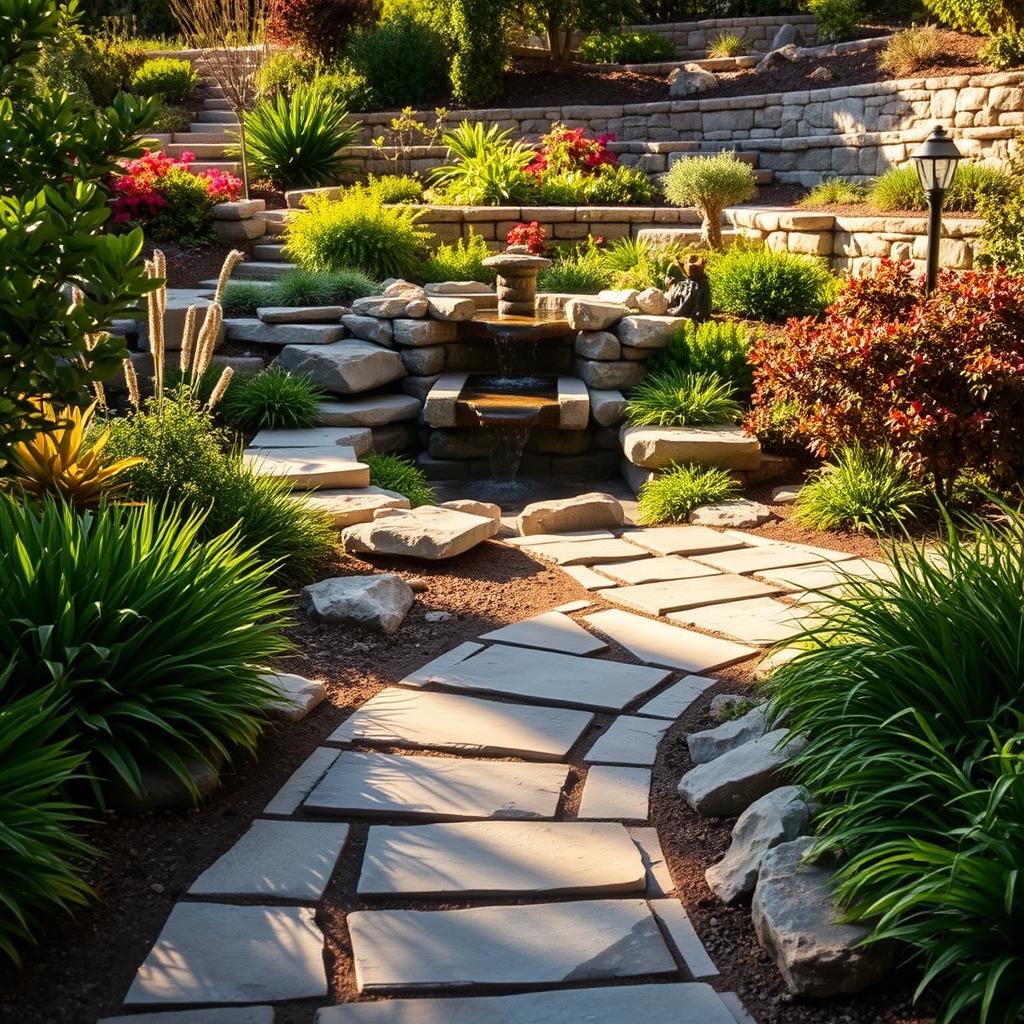
Landscaping with hardscaping means adding non-living parts to your outdoor area. These parts give structure, function, and beauty to gardens and yards.
Defining Hardscaping
Hardscaping is about the non-plant parts of landscape design. It includes:
- Patios and decks
- Walkways and paths
- Retaining walls
- Outdoor kitchen areas
- Stone or gravel features
Key Benefits of Hardscaping
Adding hardscaping design can change your outdoor living for the better. Here are the main benefits:
| Benefit | Description |
|---|---|
| Increased Property Value | Well-designed hardscape elements can boost home resale prices |
| Low Maintenance | Reduces ongoing garden care requirements compared to traditional landscaping |
| Functional Spaces | Creates usable outdoor areas for entertainment and relaxation |
“Hardscaping is the backbone of any well-designed outdoor space, providing structure and purpose to your landscape.” – Landscape Design Professional
Understanding hardscaping lets homeowners make outdoor spaces that are both beautiful and practical. The right mix of hardscape and landscape can make an ordinary yard into a special living area.
Key Hardscaping Elements to Consider
A garden makeover with hardscape turns outdoor spaces into something special. Outdoor hardscaping adds structure, function, and beauty to your yard. Knowing about key hardscaping elements helps homeowners make their outdoor areas both beautiful and useful.
Good garden design uses many hardscaping parts to make a welcoming outdoor space. Each part has its own role. It adds to the look and use of your yard.
Patios and Decks: Your Outdoor Living Spaces
Patios and decks are key features that make your outdoor area bigger. They offer:
- Places to relax
- Areas for parties
- A smooth move from inside to outside
Retaining Walls: Structural Beauty and Functionality
Retaining walls are great for both looks and function. They can:
- Stop soil from washing away
- Make garden levels
- Set off garden areas
Pathways: Connecting Garden Spaces
Good pathways lead you through your garden and add beauty. Pick materials and designs that match your yard:
| Pathway Material | Best Use | Aesthetic Appeal |
|---|---|---|
| Natural Stone | Rustic gardens | Organic, textured look |
| Concrete Pavers | Modern landscapes | Clean, structured appearance |
| Gravel | Informal settings | Relaxed, natural feel |
“Great hardscaping turns your garden into a living work of art that evolves with your lifestyle.” – Landscape Design Expert
Choosing and mixing these hardscaping parts well makes a beautiful and useful outdoor space. Each part is important in making your garden a special place.
Choosing the Right Materials for Hardscaping
Choosing the right materials is key to a great hardscape. Hardscaping experts know that the right choice affects durability, looks, and design. The right materials can turn a simple outdoor area into a beautiful space that matches your home.
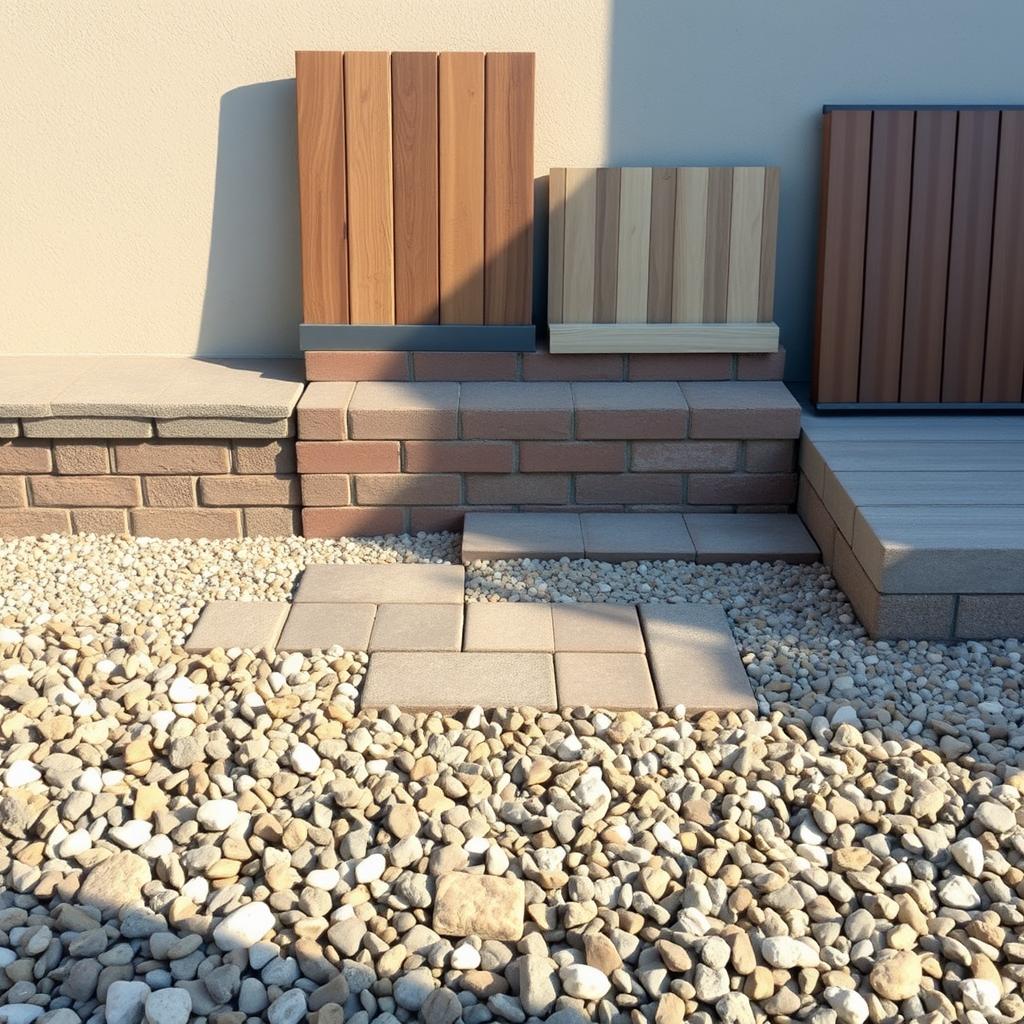
Homeowners have many options for hardscaping materials. Each option has its own special qualities that can change your garden’s look and use.
Natural Stone vs. Pavers
Natural stone gives a elegant and timeless look. Experts often suggest using:
- Flagstone
- Granite
- Slate
Pavers offer uniformity and design freedom. They come in many colors and patterns, making it easy to create unique garden designs.
Concrete Options
Concrete has come a long way. Today, you can find:
- Stamped concrete
- Colored concrete
- Exposed aggregate
| Material | Durability | Cost | Aesthetic Appeal |
|---|---|---|---|
| Natural Stone | High | Expensive | Excellent |
| Pavers | Medium | Moderate | Very Good |
| Concrete | High | Affordable | Good |
Wood and Composite Materials
Wood and composite materials add warmth and texture. Composite decking is a low-maintenance choice that resists weathering and decay.
Professional hardscaping contractors can guide you through these choices. They help make your garden a beautiful and functional outdoor space.
Planning Your Hardscape Design
Transforming your garden with hardscaping needs careful planning and design. Your outdoor space is a canvas for new ideas. These ideas should mix function with beauty.

Good garden hardscaping starts with knowing your landscape and design chances. Planning well makes your outdoor space beautiful and useful.
Assessing Your Garden Space
Before starting hardscaping, check your garden’s special features:
- Measure the total area
- Look at sunlight and shade
- Check soil and drainage
- See what landscape features you have
Creating Focal Points
Hardscaping can turn simple spaces into amazing outdoor rooms. Make focal points that catch the eye and add interest:
| Focal Point Type | Design Impact |
|---|---|
| Water Features | Adds calm and movement |
| Sculptural Elements | Acts as an artistic anchor |
| Architectural Structures | Brings vertical interest |
Ensuring Accessibility
Make your hardscape accessible to all. Inclusive design means spaces for everyone, no matter their mobility or age. Think about:
- Smooth, even paths
- Gentle slopes
- Wide turning areas
- Handrails and supports
With careful planning, your hardscape design will be inviting. It will mix function, beauty, and accessibility perfectly.
Integrating Hardscaping with Landscaping
Landscaping with hardscaping turns simple gardens into beautiful outdoor spaces. It’s all about blending hard and soft elements well. This needs careful planning and creative ideas.

Improving your garden with hardscaping means making hard and soft parts look good together. This makes your outdoor area feel complete and well-thought-out.
Harmonizing with Plants
Good landscaping with hardscaping means picking and placing plants wisely. Here are some tips:
- Put soft, flowing plants near hard structures
- Choose plants that match your hardscape materials
- Layer plants around stone or concrete features
Using Borders and Edging
Borders and edging mark spaces and make transitions clear. Decorative stone edges or simple concrete lines can nicely divide hardscape and landscape areas.
Creating Diverse Textures
Texture is key in garden design. Mix smooth concrete with rough stone and add soft, varied plants. This adds interest and depth to your outdoor area.
“A well-designed garden is a symphony of textures, materials, and living elements.”
By carefully mixing hardscaping and landscaping, you can make an outdoor space that’s both useful and beautiful.
Sustainable Hardscaping Practices
Creating outdoor spaces that are good for the environment means careful planning and choosing the right materials. Sustainable hardscaping is more than just looking good. It’s about making your garden better for the planet and more functional for you.
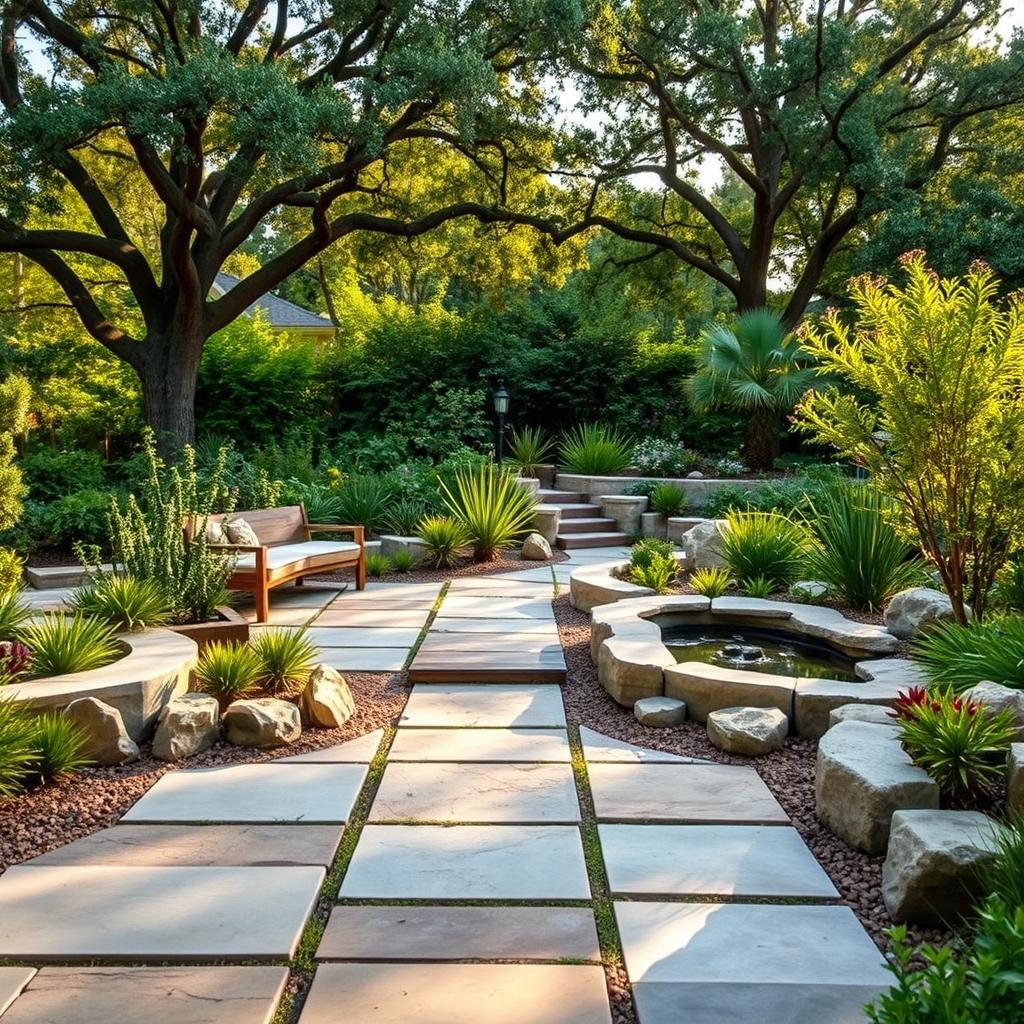
- Select recycled or locally sourced materials
- Choose permeable surface options
- Minimize water consumption
- Reduce carbon footprint through smart design
Eco-Friendly Materials
Today, there are many green options for hardscaping. Reclaimed stone, recycled concrete, and wood from sustainable forests are great choices. They’re not only good for the planet but also make your outdoor area look and last great.
Water Management Techniques
Managing water well is key to sustainable outdoor spaces. Permeable paving lets rainwater soak into the ground, cutting down on runoff. Rain gardens and smart drainage systems also help save water.
- Install permeable pavers
- Create rain gardens
- Design efficient drainage systems
- Collect and reuse rainwater
By choosing sustainable options, you can create a beautiful outdoor space that’s good for the planet. It will also make your property more valuable and eco-friendly.
Maintaining Your Hardscape Features
Hardscaping turns gardens into beautiful outdoor spaces. But, keeping them up is key to their look and function. Hardscaping pros say regular care is vital to keep your garden looking great.
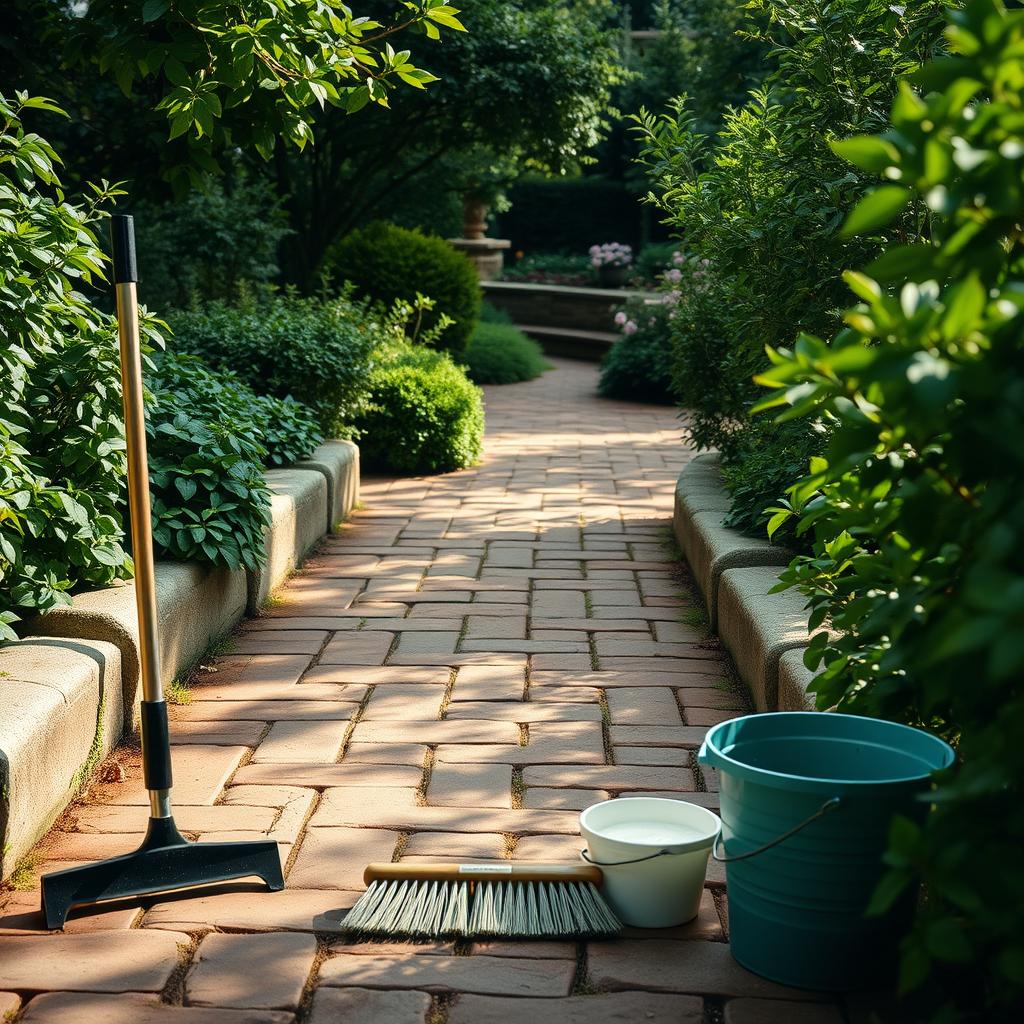
Good maintenance means knowing what each hardscape material needs. It also means sticking to a routine care plan.
Cleaning and Repair Tips
Keeping your hardscape clean stops damage and keeps it looking good. Here are some cleaning tips:
- Remove debris regularly using soft-bristled brushes
- Use the right cleaning solutions for each material
- Fix small cracks or chips right away to stop bigger problems
- Seal porous surfaces to guard against stains and weather
Seasonal Maintenance Strategies
Each season has its own challenges for keeping your hardscape in top shape. Here are some seasonal tips:
| Season | Maintenance Tasks |
|---|---|
| Spring | Deep clean surfaces, check for winter damage, fix any cracks |
| Summer | Look for weeds, apply sealants, clean outdoor furniture |
| Fall | Clear fallen leaves, get surfaces ready for winter |
| Winter | Avoid salt, remove snow gently, protect delicate areas |
Pro tip: Talk to local hardscaping pros for tips on caring for your outdoor spaces all year.
Incorporating Lighting into Your Hardscaping
A garden makeover with hardscape isn’t complete without strategic lighting. Transform your garden with hardscaping by understanding how outdoor lighting can dramatically enhance your exterior spaces. Lighting serves multiple purposes beyond simple illumination, creating atmosphere, improving safety, and highlighting your landscape’s best features.
Outdoor lighting plays a key role in garden design, adding both function and beauty. Proper illumination can make your outdoor spaces usable and inviting well into the evening.
Exploring Outdoor Lighting Options
- Path lights for walkway safety
- Accent lights for architectural features
- Uplighting for trees and vertical elements
- Deck and step lighting for functionality
Strategic Lighting for Security and Ambiance
Lighting has dual roles in hardscape design. It can deter intruders and create a warm, welcoming atmosphere.
| Lighting Type | Purpose | Best Location |
|---|---|---|
| Motion Sensor Lights | Security | Entrances, Dark Corners |
| Soft Landscape Lights | Ambiance | Patios, Garden Borders |
| Solar Path Lights | Guidance | Walkways, Garden Paths |
When planning your garden makeover with hardscape, consider lighting as a key design element. Strategically placed lights can transform ordinary outdoor spaces into extraordinary evening retreats.
Hardscaping Ideas for Small Gardens
Small gardens come with their own set of challenges and chances for creative solutions. Homeowners with small outdoor spaces can turn their areas into beautiful, useful landscapes. This is done by using smart garden hardscaping ideas that make the most of every inch.
To improve your garden with hardscaping, you need to plan carefully and think outside the box. The goal is to add visual appeal while also being practical.
Vertical Elements: Expanding Your Garden’s Potential
Vertical hardscaping can greatly increase the space in small gardens. Here are some creative ideas:
- Wall-mounted planters with integrated shelving
- Trellises with built-in seating areas
- Compact vertical garden structures
- Hanging wall features with integrated lighting
“In small gardens, think upward, not outward” – Landscape Design Experts
Multi-Functional Spaces: Smart Design Strategies
Make the most of small garden areas by designing spaces that do more than one thing. Here’s a look at different multi-functional hardscaping ideas:
| Design Concept | Space Efficiency | Functionality |
|---|---|---|
| Bench with Storage | High | Seating + Storage |
| Raised Planter Walls | Medium | Gardening + Boundary Definition |
| Stepped Landscape Levels | High | Visual Interest + Functional Zones |
By using these garden hardscaping ideas, even the smallest outdoor spaces can become amazing parts of your home. Creativity and smart design are key to turning small gardens into beautiful, useful areas.
Finding the Right Professionals for Your Project
Choosing top-notch hardscaping contractors can make your outdoor space truly stand out. These experts know how to design and build outdoor spaces that look great and work well. Look for local contractors with impressive portfolios and a history of success in landscape design and construction.
When looking for hardscaping contractors, make a list of questions about your project. Check if they are licensed, insured, and certified. Ask to see their past work and learn about their design and project management methods.
It’s important to understand the costs of your project. Good contractors will give you clear estimates that include all expenses. Compare different quotes to find the best value for the quality and design you want.
Meeting contractors in person is key. It lets you talk about your ideas, see how they communicate, and check if they fit your project’s goals. Choose those who show they know their stuff, are professional, and are excited about your project.
FAQ
What exactly is hardscaping?
How much does a typical hardscaping project cost?
FAQ
What exactly is hardscaping?
Hardscaping is the part of a landscape that’s not living. It includes things like patios, walkways, and retaining walls. These hard surfaces work with the softer parts like plants and grass.
How much does a typical hardscaping project cost?
The cost of hardscaping varies a lot. It can be from ,000 to ,000. This depends on the project size, materials, and design complexity. Small projects start at
FAQ
What exactly is hardscaping?
Hardscaping is the part of a landscape that’s not living. It includes things like patios, walkways, and retaining walls. These hard surfaces work with the softer parts like plants and grass.
How much does a typical hardscaping project cost?
The cost of hardscaping varies a lot. It can be from $3,000 to $25,000. This depends on the project size, materials, and design complexity. Small projects start at $1,500, while big backyard changes can cost over $50,000.
Can I do hardscaping myself, or do I need a professional?
Simple projects might be DIY, but complex ones need a pro. Think about your skills, tools, and the project’s complexity before deciding.
What are the best materials for hardscaping?
Good materials include natural stone, concrete pavers, brick, gravel, and wood. Each has its own benefits. Stone is durable and beautiful, pavers are versatile, and wood adds warmth.
How do I maintain my hardscaping features?
Maintenance is key. Seal stone or concrete yearly, clean with the right cleaners, and remove weeds. Check for settling and fix cracks quickly to avoid damage.
Will hardscaping increase my property value?
Yes, it can boost your property value by up to 15%. Buyers like nice outdoor spaces that are easy to maintain and add living areas.
How can I make my hardscaping more environmentally friendly?
Use permeable materials, choose local stones, and go for recycled materials. Rainwater harvesting and low-impact materials are also good choices.
What hardscaping options work best for small gardens?
For small gardens, think vertical like wall gardens. Use multi-functional spaces and compact pathways. Choose lightweight materials to avoid overwhelming the area. Clever design can make a small space feel bigger.
How long does a typical hardscaping project take?
Time varies with project complexity. Small projects might take 2-3 days, while big ones can take 2-4 weeks. Weather, material availability, and project size affect the timeline.
Can hardscaping help with drainage issues?
Yes! Solutions like French drains, proper grading, and permeable pavers can manage water flow. They prevent erosion and solve drainage problems.
,500, while big backyard changes can cost over ,000.
Can I do hardscaping myself, or do I need a professional?
Simple projects might be DIY, but complex ones need a pro. Think about your skills, tools, and the project’s complexity before deciding.
What are the best materials for hardscaping?
Good materials include natural stone, concrete pavers, brick, gravel, and wood. Each has its own benefits. Stone is durable and beautiful, pavers are versatile, and wood adds warmth.
How do I maintain my hardscaping features?
Maintenance is key. Seal stone or concrete yearly, clean with the right cleaners, and remove weeds. Check for settling and fix cracks quickly to avoid damage.
Will hardscaping increase my property value?
Yes, it can boost your property value by up to 15%. Buyers like nice outdoor spaces that are easy to maintain and add living areas.
How can I make my hardscaping more environmentally friendly?
Use permeable materials, choose local stones, and go for recycled materials. Rainwater harvesting and low-impact materials are also good choices.
What hardscaping options work best for small gardens?
For small gardens, think vertical like wall gardens. Use multi-functional spaces and compact pathways. Choose lightweight materials to avoid overwhelming the area. Clever design can make a small space feel bigger.
How long does a typical hardscaping project take?
Time varies with project complexity. Small projects might take 2-3 days, while big ones can take 2-4 weeks. Weather, material availability, and project size affect the timeline.
Can hardscaping help with drainage issues?
Yes! Solutions like French drains, proper grading, and permeable pavers can manage water flow. They prevent erosion and solve drainage problems.