
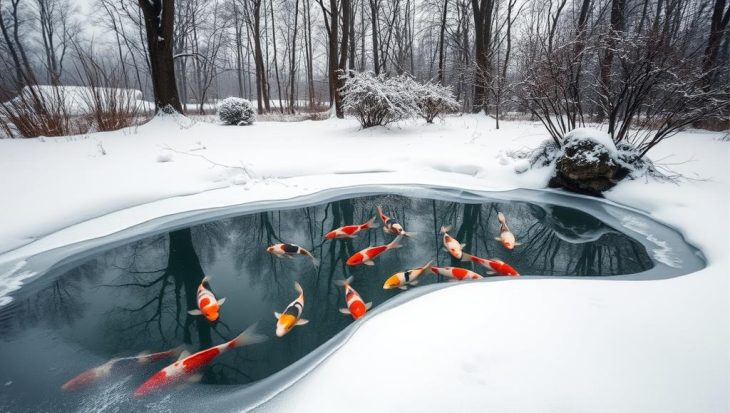
Winterizing your koi-pond is key to keeping your aquatic ecosystem alive during the cold months. It’s important to plan and prepare carefully to protect your fish and plants from harsh winter weather. With the right steps, your aquatic friends can make it through the freezing temperatures.
Water temperature drops a lot in winter, posing big challenges for koi fish. Proper winter care helps keep your pond’s balance, avoiding health issues and ecosystem problems. Pond owners who know their stuff focus on proactive maintenance for a good winter.
Using specific techniques, you can keep your koi safe and create the best conditions for their survival. Managing water quality and temperature are both vital for protecting your pond’s inhabitants.
Key Takeaways
- Winterizing prevents fish health complications
- Proper preparation protects pond ecosystem
- Temperature management is critical
- Regular monitoring ensures koi survival
- Strategic equipment helps maintain pond health
Why Winterizing Your Koi Pond is Essential
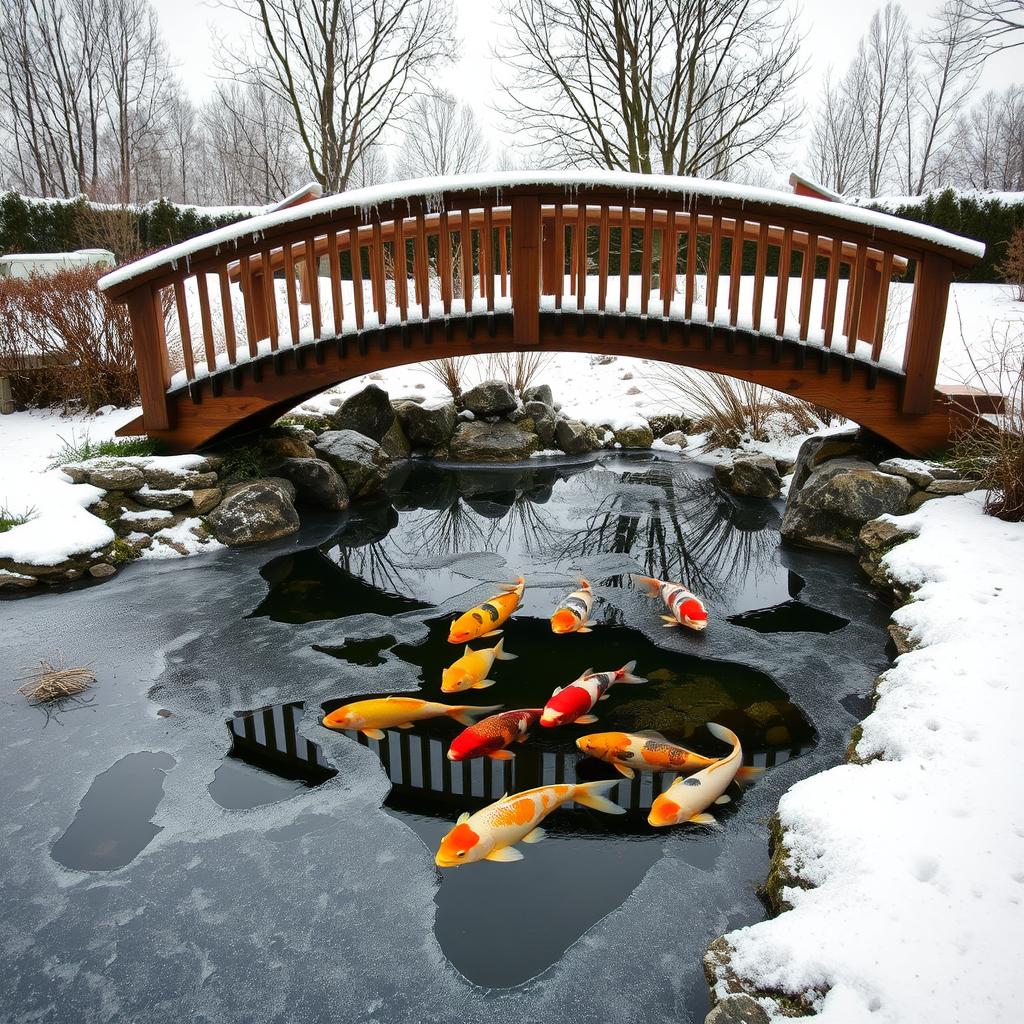
Preparing your koi pond for winter is not just a seasonal task. It’s vital for keeping your pond healthy. Winter can be tough on your pond, putting the balance of life at risk. Proper care ensures your fish, plants, and pond environment make it through the cold months.
Understanding the Benefits
Winterizing your koi pond offers many benefits:
- Prevents damage to pond infrastructure
- Protects fish from extreme temperature fluctuations
- Maintains water quality during dormant months
- Reduces stress on aquatic life
Avoiding Health Issues
Cold weather poses big challenges for koi. Without proper preparation, they face health risks. Sudden cold can weaken their immune systems, making them more likely to get sick or die.
Protecting Your Fish and Plants
Winter maintenance for koi ponds includes steps to protect fish and plants. By using careful winterization methods, you create a safe space. This allows your pond ecosystem to rest and prepare for a strong spring.
“Careful winter preparation is the key to a thriving pond ecosystem.” – Koi Pond Experts
Preparing Your Pond for Winter
Winterizing your koi pond is essential to keep your aquatic ecosystem healthy. A good winterization checklist helps protect your pond and fish from cold weather. It involves several important steps to keep your pond thriving.
Comprehensive Pond Cleaning
Cleaning your pond thoroughly is key. Start by removing all debris from the surface and bottom. This step prevents water quality problems and stops harmful bacteria from growing.
- Use a pond net to remove leaves, twigs, and organic matter
- Carefully vacuum the pond bottom to eliminate settled debris
- Trim back aquatic plants to prevent decomposition
Effective Debris Removal
Removing debris is more than just surface cleaning. Your winterization checklist should focus on removing contaminants that could harm water quality.
- Remove dead plant materials
- Clean pond filters thoroughly
- Check for any hidden debris in pond corners
Water Quality Testing
Water quality is critical during winter. Professional pond managers suggest testing the water to ensure it’s right for your koi.
| Water Parameter | Ideal Winter Range | Action Required |
|---|---|---|
| pH Level | 7.0 – 8.0 | Use pH stabilizers if needed |
| Ammonia | 0 ppm | Perform water changes |
| Nitrite | 0 ppm | Check biological filtration |
“Proper winter preparation is the key to a healthy pond ecosystem.” – Koi Pond Experts
By following these tips, you’ll protect your pond from winter’s harsh conditions. Each step in your checklist helps keep your pond safe and clean for your koi fish.
Essential Equipment for Winterization
Winterizing an outdoor koi pond needs the right tools to keep your fish safe and the pond healthy. Choosing the best equipment is key to your koi’s survival and the pond’s health.
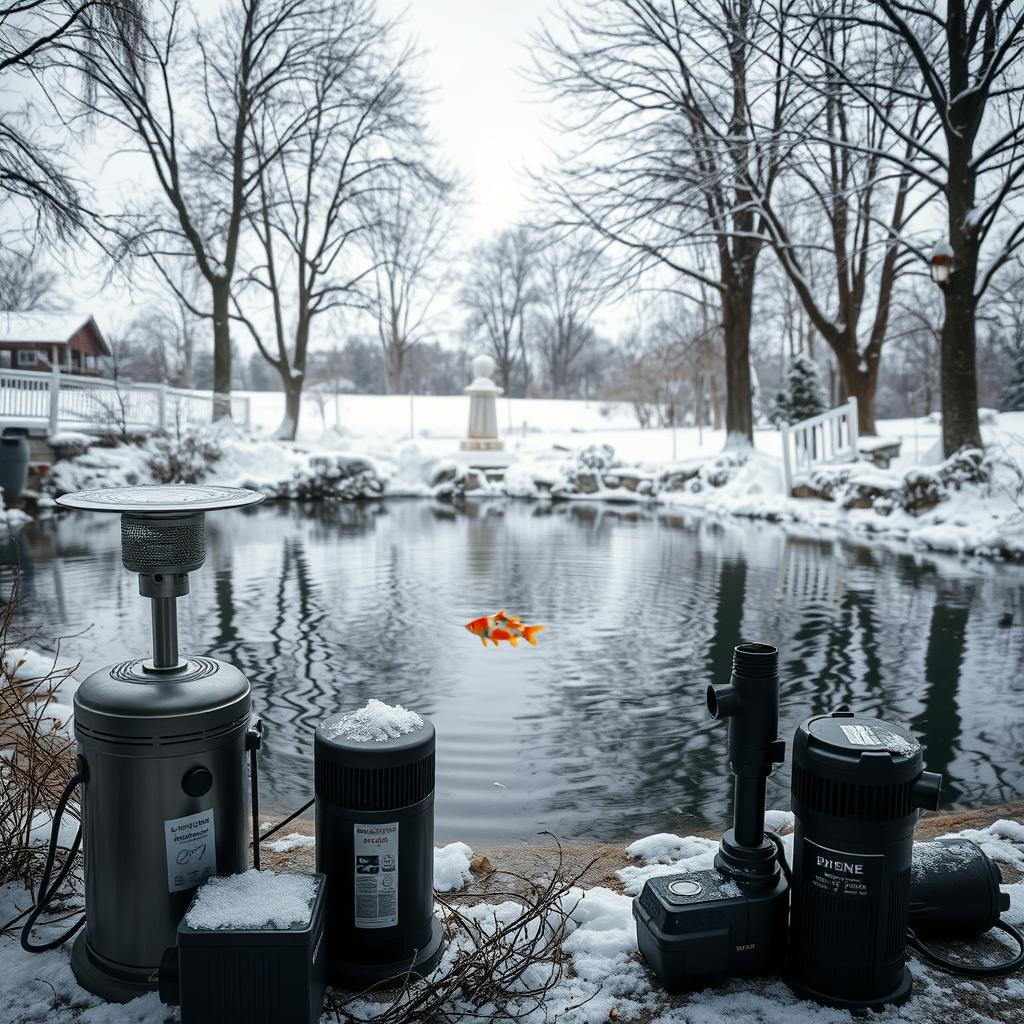
Winter prep is more than just waiting for it to pass. Koi pond heaters are vital for keeping water temperatures stable and preventing freezing.
Aerators and Oxygen Management
Good oxygen flow is essential in winter. Aerators ensure water keeps moving and prevents it from freezing on the surface, which is harmful to koi fish.
- Floating surface aerators
- Submersible pond aerators
- Bottom-mounted diffuser systems
Protective Covers and Nets
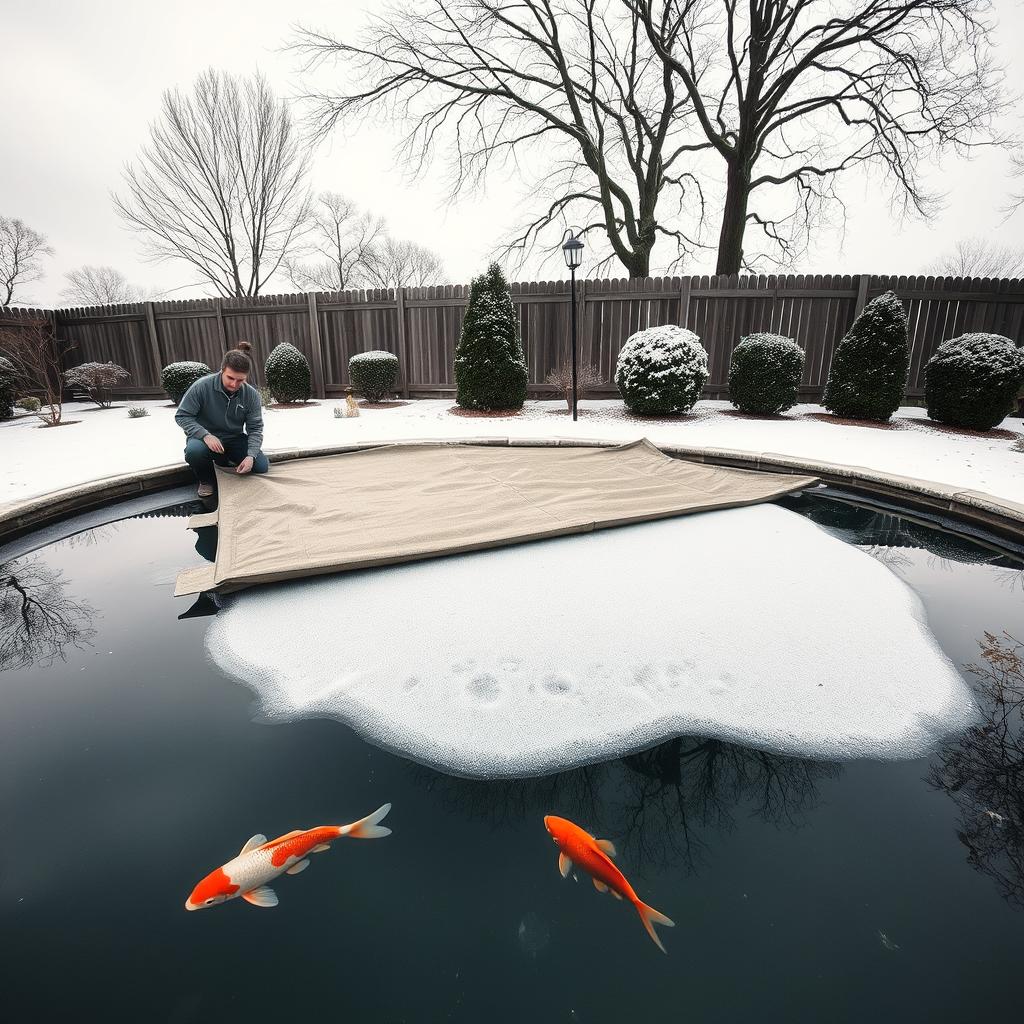
Protective covers are part of winterizing your outdoor koi pond. They keep debris out and protect against extreme cold.
| Cover Type | Protection Level | Recommended Use |
|---|---|---|
| Mesh Nets | Debris Prevention | Light Winter Areas |
| Thermal Covers | Temperature Regulation | Harsh Winter Regions |
| Rigid Plastic Covers | Complete Protection | Extreme Cold Zones |
Water Circulation Systems
Water pumps and filters are critical for pond health in winter. Pick models that work well in cold temperatures.
- Select frost-resistant pumps
- Implement slow-flow filtration
- Use ceramic media for beneficial bacteria
Pro tip: Always consult local pond specialists to determine the most suitable winterization equipment for your specific climate and koi pond setup.
Monitoring Water Temperature
Winterizing your koi-pond means keeping a close eye on water temperature. In cold months, your koi’s health depends on the right environment. Water temperature is key to their survival and care during winter.
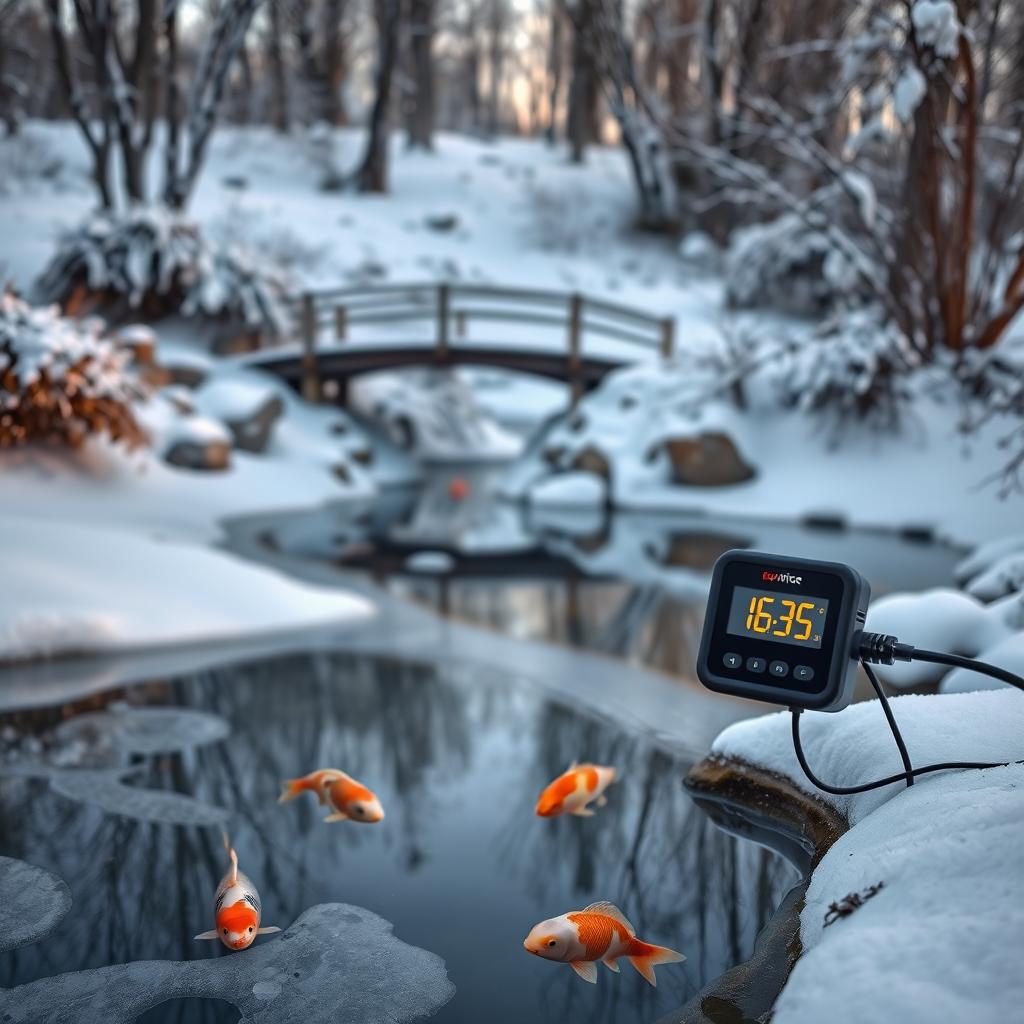
Tracking water temperature is essential for koi pond winter care. These fish go into a special state in cold weather. This affects their health and how they survive.
Ideal Temperature Range for Koi
Koi fish need certain temperatures to stay healthy:
- 40-50°F: Metabolic functions slow dramatically
- 50-60°F: Minimal activity and reduced feeding
- Below 40°F: Risk of serious health complications
Using a Thermometer
Choosing the right thermometer is key for winterizing your koi-pond. Digital pond thermometers give accurate readings. They’re easy to install for consistent monitoring.
When to Take Action
Look out for these temperature signs:
- Water temperature dropping below 50°F: Reduce feeding
- Temperature nearing 40°F: Prepare for winter metabolism changes
- Extended periods below 40°F: Consider protective interventions
Professional tip: Regular monitoring prevents winter-related fish health issues.
Keeping Koi Healthy During Winter
Winter care for koi ponds is key to keeping your fish healthy. Koi are tough, but they need extra care in the cold. Knowing their needs helps them make it through winter.
In winter, koi move less and eat less. Their bodies slow down, so you must adjust how you feed and check on them.
Adjusting Feeding Schedules
Feeding koi in winter needs thought. Their bodies can’t digest food as well when it’s cold. Here’s what to do:
- Stop feeding when water temperature drops below 50°F
- Use specialized wheat germ-based cold water food if temperatures remain between 40-50°F
- Feed sparingly – no more than what fish can consume in 5 minutes
Observing Koi Behavior
Watching your koi’s behavior is important in winter. Healthy koi will:
- Remain near the bottom of the pond
- Move slowly and deliberately
- Maintain neutral positioning in water
Signs of Stress to Look For
Spotting stress early can stop big health problems. Look out for these signs:
| Stress Indicator | Potential Meaning |
|---|---|
| Erratic swimming | Potential water quality issues |
| Unusual coloration | Possible disease or poor nutrition |
| Gasping at surface | Oxygen deficiency |
Proactive winter pond management ensures your koi remain healthy and vibrant throughout the cold season.
Winterizing Pond Plants
Winterizing your outdoor koi pond is more than just caring for fish. You also need to focus on your pond plants to keep them alive through the cold months. With the right winterizing tips, your pond will stay healthy and beautiful.
It’s key to prepare your pond plants for winter to keep your aquatic garden thriving. Each plant type needs its own care to make it through the cold weather.
Trimming and Pruning Techniques
Before winter hits, follow these important pruning steps:
- Remove dead or decaying foliage from aquatic plants
- Cut back marginal plants to about 2-3 inches above water level
- Trim floating plants and water lilies to prevent rot
Storing Delicate Plant Species
Tropical and subtropical species can’t handle freezing. They need special care during winter:
- Remove sensitive plants from the pond
- Store in indoor containers with minimal water
- Maintain temperatures between 50-60°F
- Provide indirect light and minimal watering
Protecting Marginal Plants
Marginal plants along pond edges need special care in winter. Wrap their containers with insulation or move them to deeper areas of the pond. This keeps their temperature stable during the cold months.
By following these winterizing tips, you’ll keep your aquatic plants safe. This will help your pond ecosystem thrive in the spring.
Maintaining Your Pond’s Ecosystem
Winterizing your koi-pond is all about keeping its ecosystem in balance. Cold months bring big changes that need careful management. This ensures your pond stays healthy.
A good koi pond winterization checklist has key parts for a thriving ecosystem.
Beneficial Bacteria’s Role
Cold weather slows down beneficial bacteria. These tiny workers clean up waste and keep water quality good. In winter, we need to help them stay active.
- Use cold-water bacterial supplements
- Reduce organic waste before winter
- Maintain minimal bacterial populations
Managing Fish Loads
Winter can be tough on koi. Managing fish numbers helps avoid overcrowding and disease.
| Pond Size | Recommended Fish Load | Winter Considerations |
|---|---|---|
| 100 sq ft | 3-4 medium koi | Reduce by 25% in winter |
| 200 sq ft | 6-8 medium koi | Reduce by 20% in winter |
Balancing Nutrient Levels
Managing nutrients is key in winter. Too many can cause algae and bad water. Regular checks and less feeding keep things balanced.
- Use winter-specific water test kits
- Monitor phosphate and nitrate levels
- Implement gentle filtration
By sticking to these tips, you’ll keep your koi pond healthy all winter. When spring comes, your pond will be full of life.
What to Do During Extreme Cold
Winter can be tough for koi pond owners. To keep your pond safe during cold snaps, you need a good plan. Freezing weather can harm your fish and pond.
When it gets very cold, you must take special steps. It’s important to stop ice from forming and get ready for storms. This helps keep your pond healthy.
Preventing Ice Formation
Ice can be bad for koi ponds. Here are key ways to keep your fish safe:
- Install koi pond heaters for winter to keep water open
- Use floating de-icers to stop the pond from freezing over
- Make a small hole in the ice for gas exchange
Emergency Measures for Fish
When it’s very cold, your koi are at risk. Here are urgent steps to protect them:
- Stop feeding when the water is below 50°F
- Watch for signs of stress or odd behavior in fish
- Make sure the pond is deep enough for fish to survive winter
Winter Storm Preparations
Good koi pond care means being ready for storms. Here are some steps to take:
- Secure pond covers to keep out debris
- Check pond equipment for damage from the weather
- Have a backup heating system ready
Being well-prepared can save your pond from disaster during harsh winters.
Spring Preparation and Clean-Up
As winter ends and the weather warms up, it’s time to get your koi pond ready for spring. Winter care for your koi pond is important to ensure a healthy start. This helps your fish thrive.
Spring brings a new season of pond care. Your koi have been sleeping through the cold months. Now, it’s time to help them wake up and get healthy again.
Gradual Temperature Warming
When the weather warms up, it’s important to manage the pond’s temperature carefully. Sudden changes can stress your fish. Here’s how to avoid that:
- Use a reliable pond thermometer to track water temperature
- Gradually increase water temperature by 1-2 degrees per day
- Avoid rapid heating that could shock your koi
Cleaning After Winter
Winter leaves and debris can pile up in your pond. It’s time for a deep clean. Take out any leaves, branches, and sediment that fell in during winter.
| Cleaning Task | Priority Level | Recommended Tools |
|---|---|---|
| Remove Debris | High | Pond net, skimmer |
| Check Filter System | Medium | Cleaning brushes, replacement filters |
| Water Quality Test | High | Water testing kit |
Preparing for Spawning Season
Spring is when your koi start to spawn. Make sure your pond is ready for this important time. Keep the water quality good and give them enough space to breed.
- Check water quality parameters
- Provide spawning mats or plants
- Monitor fish behavior for mating signs
Tip: Patience and careful observation are key to successful spring pond management.
Common Mistakes to Avoid
Winterizing your koi pond right is all about the details. Many pond owners make big mistakes that harm their pond and fish. Knowing these common mistakes can help keep your pond and fish safe through winter.
Water quality is key, but often overlooked in winter. Make sure to test and monitor your water regularly. Bad water quality can stress your fish, making them more vulnerable.
Feeding your koi is also critical. In cold weather, they need less food and the right kind. Too much or the wrong food can hurt their health.
Don’t forget about your pond equipment. Things like aerators, heaters, and filters need a good check before winter. Not taking care of them can lead to big problems when your pond needs it most.